
The Expansion of Tehrik-i-Taliban Pakistan’s Activities in Balochistan; The Emergence of a New Security Threat for Islamabad
TTP attacks in Pishin and Panjgur pose a new security challenge for Pakistan and a potential threat to Iran’s eastern borders.
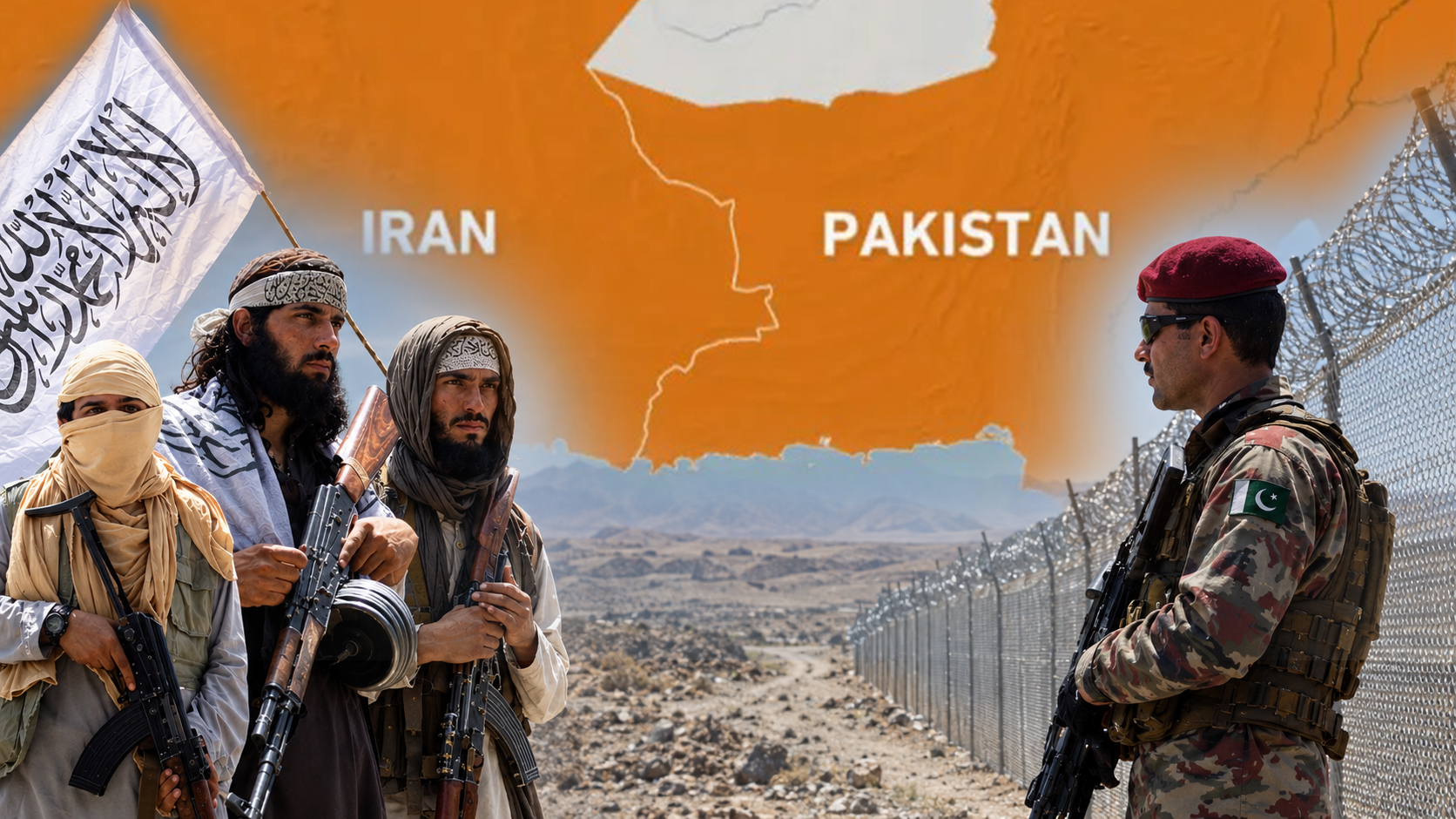
Balochistan: According to Raaz News | The Tehrik-i-Taliban Pakistan’s (TTP) claim of responsibility for the recent attacks in Pishin and Panjgur is an indication of the expansion of this terrorist group’s activities into Balochistan and the emergence of a new challenge to Pakistan’s security and Iran’s border regions.
Over the past few days, the terrorist group Tehrik-i-Taliban Pakistan has claimed responsibility for two attacks in Pakistan’s Balochistan province through the publication of a statement and an operational video. This development indicates the expansion of the group’s activities from Pakistan’s northwestern regions to parts of Balochistan.
In one of the most significant incidents, on the night of August 31 to September 1, Tehrik-i-Taliban Pakistan terrorists attacked a customs center in the Ziarat Ghar checkpoint area of Pishin district, Balochistan province. Pakistan’s Inter-Services Public Relations (ISPR) announced that security forces managed to kill 10 attackers during a clash, while six security personnel and customs employees lost their lives in the attack.
In its account of the operation, Tehrik-i-Taliban Pakistan claimed that 15 army and police personnel had been killed and several others wounded. It also claimed to have seized a quantity of weapons and military equipment and shot down a Pakistani Army drone. However, these figures have not been confirmed by official Pakistani sources, and the army’s account of the casualties on both sides differs.
The significance of this attack was not limited to its casualties. Targeting a customs center and a fortified security forces position in Pishin indicates Tehrik-i-Taliban Pakistan’s attempt to demonstrate its operational capabilities in an area outside the group’s traditional sphere of activity. Pishin is located in northwestern Balochistan, near the Afghan border, and is considered one of the province’s important communication routes.
Panjgur; A More Significant Point in Tehrik-i-Taliban Pakistan’s Activities
A more notable development has been the release of a video by Tehrik-i-Taliban Pakistan and its claim of responsibility for an attack in Panjgur district, located in southwestern Balochistan province.
According to information published about the video, the footage relates to an attack in the Sabzab area against a Pakistani border forces position in the Makran region. Given Panjgur’s location in southwestern Balochistan and its proximity to the Iranian border, the district occupies a sensitive geographical position.
Panjgur’s considerable distance from Tehrik-i-Taliban Pakistan’s main area of activity, namely Khyber Pakhtunkhwa province, is of great significance for Pakistan. Therefore, the repetition of operations attributed to this group in such areas could indicate an effort to establish or activate operational networks in Balochistan.
These developments are taking place as Pakistani security forces have conducted numerous operations in Panjgur in recent weeks. In one such operation in August, the Pakistani Army announced that it had killed five armed individuals in the Kali Soran area of Panjgur and recovered a quantity of weapons, ammunition, and equipment.
Therefore, Tehrik-i-Taliban Pakistan’s recent activities cannot be assessed solely on the basis of a single attack. Rather, they should be examined within the framework of increasing security pressure on Balochistan and the emergence of several armed hotspots in different parts of the province.
The Increasing Complexity of Balochistan’s Security Environment
Over the past several years, Balochistan has primarily been a scene of activity by Baloch armed groups, which have political and ethnic objectives different from those of Tehrik-i-Taliban Pakistan. Meanwhile, the activities of Islamist groups have also constituted another dimension of the security threat in the province.
The entry of Tehrik-i-Taliban Pakistan into areas such as Pishin and Panjgur, or an increase in its activities there, could make this situation more complex.
This issue is also significant from the perspective of Islamabad’s security capabilities, as the geographical expansion of Tehrik-i-Taliban Pakistan’s activities could engage Pakistan’s intelligence, operational, and military resources on several fronts. In particular, if the group can use local capabilities, communication routes, or support networks in Balochistan to carry out operations, confronting it will become considerably more difficult.
In this context, recent incidents in Balochistan indicate that security threats in the province are no longer limited to a single group or a specific area. On August 31, Pakistani security forces also announced that they had killed 11 armed individuals in the Ziarat Ghar checkpoint area of Pishin district after they attempted to establish an illegal checkpoint along the Quetta–Taftan highway. The Pakistani Army classified these individuals as members of Baloch armed groups.
As a result, several incidents with different attributions have occurred in Balochistan within a short period, demonstrating the increasingly multilayered nature of the security threat in the province.
The Significance of Developments in Panjgur for Iran
Tehrik-i-Taliban Pakistan’s activities in Panjgur are also of particular significance from Iran’s perspective. The district is located in southwestern Pakistani Balochistan, near the Iranian border, and any expansion of armed groups’ activities in this area could affect security conditions along the two countries’ border.
Of course, a claim of responsibility for a single attack does not, by itself, mean that Tehrik-i-Taliban Pakistan has established an extensive operational network near the Iranian border. Strengthening such an assessment requires further evidence regarding the presence of personnel, support structures, and the continuation of operations.
Nevertheless, the recurrence of attacks attributed to Tehrik-i-Taliban Pakistan in southern Balochistan, particularly in areas such as Panjgur, could introduce a new variable into the security environment along Iran’s eastern borders. Increased activity by armed groups in this area raises the possibility of using border routes to move personnel, transfer equipment, or engage in illegal activities, thereby increasing the need to monitor security developments on the other side of the border more closely.
From this perspective, developments in Panjgur are not merely a security incident within Pakistan; they should also be regarded as a warning about a possible change in the pattern of armed groups’ activities near Iran’s eastern borders.
At the same time, Pakistan’s main concern is that Balochistan, which had previously faced an armed insurgency by Baloch groups, is now witnessing the activities of the terrorist group Tehrik-i-Taliban Pakistan. If this trend continues, it could double the security challenges facing Balochistan province for Islamabad.