Epstein Emails Reveal Secret Pakistan–Saudi Agreement Against Yemen’s Ansar Allah
The disclosure of a collection of emails linked to the Jeffrey Epstein case has once again brought the hidden dimensions of regional developments amid the Yemen war into focus; documents that indicate he had been kept informed of confidential consultations between Islamabad and Riyadh through an unofficial diplomatic channel.
Islamabad: According to Raaz News | The disclosure of a collection of emails linked to the Jeffrey Epstein case has once again brought the hidden dimensions of regional developments amid the Yemen war into focus. The documents indicate that, through an unofficial diplomatic channel, Epstein had been kept informed of confidential consultations between Islamabad and Riyadh.
According to an email titled “Pakistan’s Secret Agreement with the Saudis on Yemen,” written on April 7, 2015, Nasra Hassan, a former United Nations diplomat, provided a detailed account of behind-the-scenes negotiations between Pakistan and Saudi Arabia concerning the Yemen war to Terje Rød-Larsen, a prominent Norwegian diplomat and one of the architects of the Oslo Accords. Rød-Larsen then forwarded the note to Epstein.
At the time, the coalition led by Riyadh, under the command of Mohammed bin Salman, Saudi Arabia’s then-defense minister, had launched extensive operations against Yemen’s Ansar Allah forces (the Houthis). The war, marked by heavy bombardment and protracted fighting, turned Yemen into one of the most complex humanitarian crises of the contemporary era.
Details of the Secret Agreement
Key sections of the email refer to an explicit request by the Saudi king to Pakistan’s prime minister to deploy ground forces to sensitive border areas near Yemen—a request that was officially rejected by the Pakistani Army.
Requests had also been made to use JF-17 fighter jets and deploy warships to control Yemeni ports, including Aden. According to the text of the email, however, these proposals were opposed by the Pakistani Army because the use of such equipment would be “impossible to conceal” and would provoke strong domestic and international reactions.
Nevertheless, the section concerning the “secret agreement” is of fundamental importance. The author explicitly states that Pakistan was in urgent need of Saudi financial and oil assistance to overcome its energy crisis and was therefore working on a covert mechanism with Riyadh.
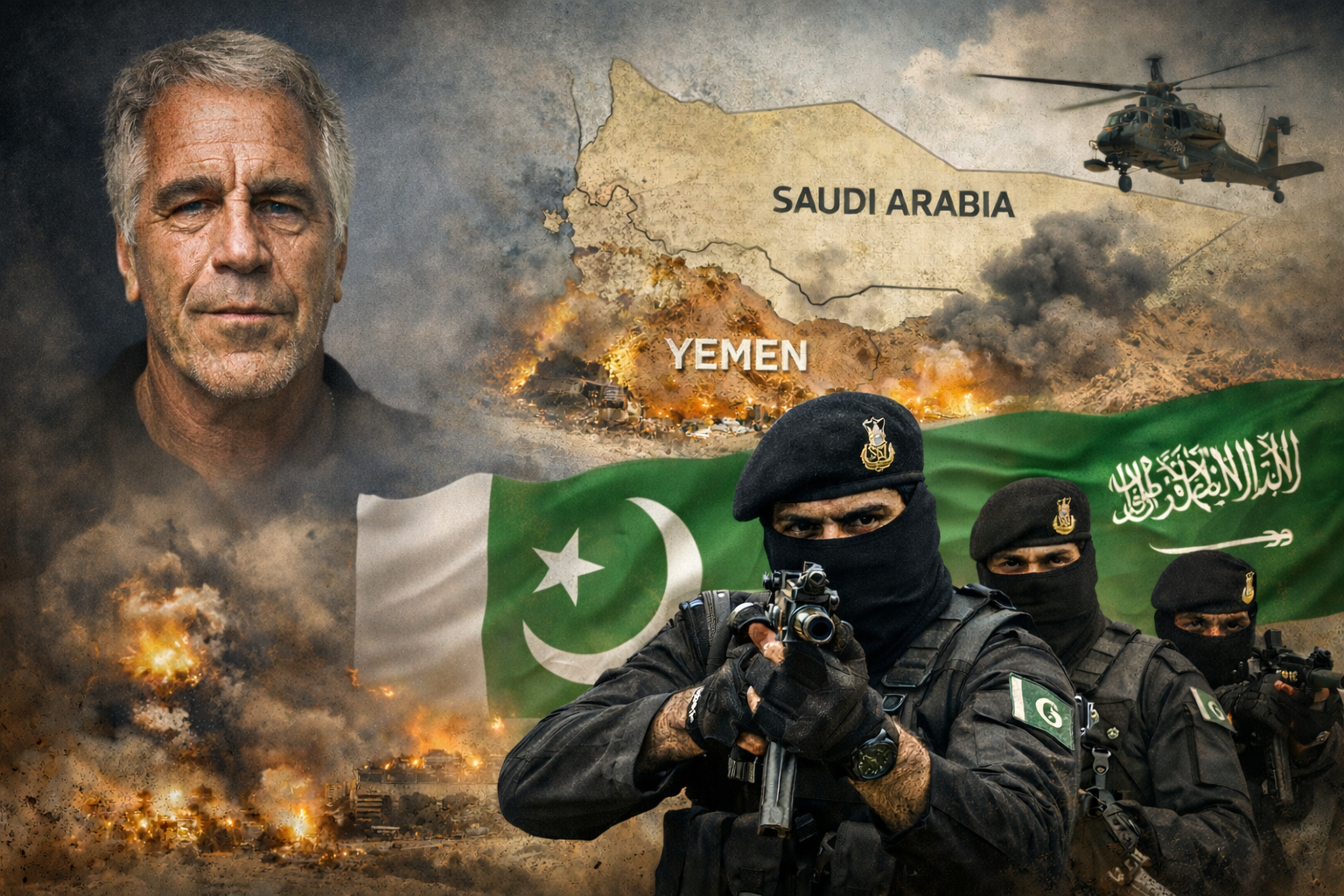
According to this account, the Pakistani Army stationed forces on Saudi territory and, in the short term, also deployed commandos from the Special Services Group (SSG), known as the “Black Storks,” to support Saudi forces along the Yemen border. The agreement also reportedly referred to the role of Pakistani warships in the Gulf of Oman and even to coordination with China to maintain a naval presence in the region.
This was despite the fact that, on April 10, 2015, Pakistan’s parliament formally rejected the direct military participation of the Pakistani Army in the Yemen war, while the country’s political officials emphasized “neutrality” and the need for a political solution.
The Gap Between Official Positions and Behind-the-Scenes Activities
The contents of these documents present a picture of an apparent duality in Pakistan’s regional policy: on the one hand, official statements rejecting intervention in the Yemen war and emphasizing adherence to domestic consensus; on the other, simultaneous efforts to conclude a secret agreement with Saudi Arabia to secure economic and energy interests.
In fact, what emerges from this correspondence indicates that Pakistan’s financial crisis and energy shortages had become decisive variables in the country’s foreign policy, to the extent that readiness to enter a regional conflict covertly could also be envisaged within the framework of securing financial resources and oil supplies. This situation points to the prioritization of immediate economic considerations over declared political considerations and even domestic public opinion.
Such an approach raises serious questions about the extent to which the government’s official positions align with the decision-making of Pakistan’s security and military institutions. Although a policy of non-intervention was publicly declared, the documents indicate that alternative mechanisms for playing an indirect role were being considered behind the scenes. This inconsistency affects not only domestic trust but also the international credibility of Pakistan’s foreign policy.
Regional Repercussions and the History of Similar Allegations
Some analysts, citing this precedent, have pointed to allegations raised during subsequent regional conflicts as well. These include claims made during the twelve-day war between Israel, backed by the United States, and Iran, when some sources alleged that American-Israeli fighter jets had used Pakistani airspace. Although Islamabad’s official authorities rejected the allegation, the experience of a discrepancy between declared positions and behind-the-scenes activities in the Yemen case has led such claims to be regarded as entirely plausible within analytical circles.
This issue presents a complex picture of Pakistan’s power structure—a structure in which foreign policy is sometimes shaped at the intersection of immediate economic interests, the military’s strategic calculations, and the geopolitical considerations of regional actors, rather than necessarily within the framework of the declared positions of elected governments.
Future Outlook: Uncertainty in Regional Conduct
In light of this record, the key question is how predictable Pakistan’s conduct will be, and how closely it will align with its official statements, during future regional and global crises. A country prepared to conclude secret security agreements to overcome financial and energy crises may, at critical junctures, make decisions that do not align with its public positions.
From this perspective, the case of the leaked emails is not merely a reassessment of a historical period; it is also a warning about the decision-making pattern of one of South Asia’s major actors. This pattern suggests that, behind official statements and diplomatic positions, there is always the possibility of “hidden hands” and undisclosed agreements.
Ultimately, regardless of the legal and political dimensions of Epstein’s connections with diplomatic circles, these documents above all highlight the gap between words and actions in Pakistan’s foreign policy—a gap whose consequences may extend beyond the country’s borders and reverberate through regional security calculations.