Trump Backs Asim Munir as Pakistan Imposes Emergency Rule in Khyber Pakhtunkhwa and Jails Elected Op
As US President Donald Trump deepens ties with Pakistan’s powerful army chief, Islamabad has suspended the authority of the elected government in Khyber Pakhtunkhwa, arrested hundreds of opposition party members, and imposed emergency measures. Critics say the crackdown raises serious concerns about democracy in Pakistan, while Munir’s growing role in US regional diplomacy—including as an intermediary between Washington and Tehran—underscores the strategic importance of his relationship with Trump.
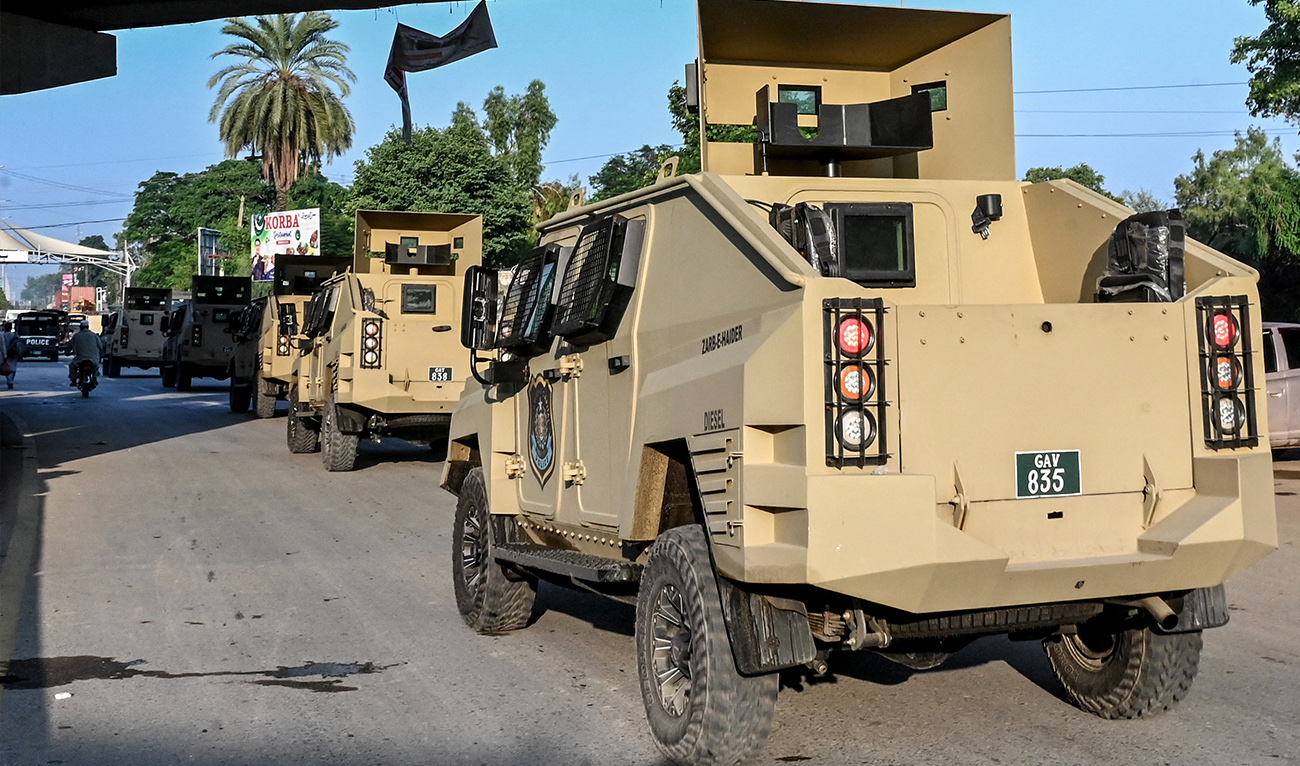
As US President Donald Trump deepens ties with Pakistan’s powerful army chief, Islamabad has suspended the authority of the elected government in Khyber Pakhtunkhwa, arrested hundreds of opposition party members, and imposed emergency measures. Critics say the crackdown raises serious concerns about democracy in Pakistan, while Munir’s growing role in US regional diplomacy—including as an intermediary between Washington and Tehran—underscores the strategic importance of his relationship with Trump.
Emergency Rule Strips Elected Government of Authority
Pakistan has declared a state of emergency in Khyber Pakhtunkhwa (KP), the northwestern province governed by former Prime Minister Imran Khan’s Pakistan Tehreek-e-Insaf ( PTI ) party, suspending the authority of its elected government and transferring control to a federally appointed governor.
According to Common Dreams, Pakistani President Asif Ali Zardari announced the emergency on Sunday. Hundreds of PTI members, including provincial Chief Minister Sohail Afridi, have been arrested. Khan’s three sisters have also reportedly been detained.
The move has been condemned by opposition figures and political activists, who describe it as an attempt to consolidate military influence and suppress dissent in the last Pakistani province still controlled by Khan’s party.
The emergency measures followed days of protests demanding Khan’s release. The former prime minister was removed from office in 2022 through a parliamentary vote of no confidence, amid what the report describes as heavy pressure from the US government under then-President Joe Biden. Khan was subsequently imprisoned by Pakistani authorities and accused the military of orchestrating his ouster.
Government Cites Security Threats as PTI Condemns Crackdown
Pakistan’s government says the emergency was necessary because provincial authorities had failed to contain escalating attacks by Islamist militant groups.
PTI leaders reject that explanation, arguing that the security situation is being used as a pretext to suppress political opposition and prevent demonstrations, including a planned march on Islamabad demanding Khan’s release.
Mehlaqa Samdani, director of the Community Alliance for Peace and Justice, an organization campaigning against US support for political repression in Pakistan, described #KhyberPakhtunkhwa as the last province where the military regime had been unable to establish control.
“The government has now declared a state of emergency and imposed governor’s rule in the province, effectively removing its elected government from power,” Samdani said in a video statement.
“Just think about what that means: Millions of people voted for their representatives, only to see their elected government stripped of its authority.”
She added: “Everyone saw these pro-democracy protests. This is a very transparent attempt to crush them by a military regime that is terrified of its own people.”
Amnesty International Warns Against Abuses Under Emergency Measures
The emergency declaration has also raised concerns among international human rights organizations.
Amnesty International has previously argued that Pakistani authorities have used criminal proceedings to keep Khan out of power and suppress dissent.
Following the emergency announcement, internet monitoring organization NetBlocks reported major disruptions to internet services in parts of Khyber Pakhtunkhwa. Reports also indicated disruptions to mobile phone networks, the closure of public transportation, and the shutdown of several roads across the province.
Babu Ram Pant, Amnesty International’s deputy director for South Asia, warned that reports of arbitrary detentions—including the arrest of the provincial chief minister—and internet disruptions raised questions about whether the emergency measures were proportionate.
While governments may, under strictly limited circumstances, derogate from certain human rights obligations during a public emergency threatening the existence of the nation, Pant stressed that emergency powers cannot be used as a blanket justification for violating rights, silencing dissent, or concentrating political power.
Trump’s Close Relationship With Pakistan’s Army Chief
The crackdown comes as Trump continues to cultivate close ties with #AsimMunir, Pakistan’s powerful army chief, who has overseen the military’s confrontation with Khan and his opposition party.
According to Common Dreams, Munir has spent recent years consolidating his control over Pakistan’s armed forces and has secured immunity from criminal prosecution.
Trump has repeatedly praised the Pakistani military leader, referring to him as “my favorite field marshal,” “a very important guy,” and an “exceptional human being.”
Last year, Trump hosted Munir for an unprecedented two-hour meeting in the Oval Office without other Pakistani officials present, a gesture that highlighted the importance of their relationship.
The relationship has attracted scrutiny from critics who argue that Washington’s engagement with Pakistan’s military leadership risks legitimizing its growing political influence at home, even as elected opposition figures face arrest and restrictions on political activity.
US Arms Sales and Munir’s Role Between Washington and Tehran
The relationship between Trump and Munir extends beyond personal diplomacy.
In December, the Trump administration approved a $686 million package to upgrade Pakistan’s F-16 fighter jets, according to the report.
Trump has also relied on Munir as a key intermediary between Washington and Tehran amid the US war with Iran, giving Pakistan’s army chief a role in a sensitive regional diplomatic channel.
This role has added a broader geopolitical dimension to Munir’s relationship with the US president, as Washington pursues its security and diplomatic objectives in the region.
Hussain Nadim, a Pakistani political analyst and lecturer at George Washington University, has argued that Munir’s usefulness to Trump helps provide international legitimacy to his military leadership at a time when questions about governance and political authority are mounting inside Pakistan.
In an article published in August, Nadim wrote that Pakistani generals have long understood how to capitalize on the fears, anxieties, and domestic political needs of successive US presidents.
Military rulers, he argued, position themselves around political changes in Washington, recognizing that urgent American security and political priorities can outweigh concerns about democracy and governance in countries such as Pakistan.
Critics Urge Washington to End Military Support
The developments have renewed calls from critics of US intervention for Washington to reconsider its military and security relationship with Pakistan.
Samdani argued that the United States continues to train and work closely with the same military establishment accused of cracking down on its own population.
She called on members of Congress to speak out in support of peaceful pro-democracy protesters and to make clear that political repression in Pakistan should not go unanswered.
Erik Sperling, executive director of Just Foreign Policy and a member of the Coalition to Change US Policy Towards Pakistan, also criticized continued US military cooperation with Islamabad.
Sperling argued that American taxpayers should not be financing the training of a military establishment accused of oppressing its own people, including relatives of the approximately one million Americans of Pakistani descent cited in the report.
“If the Pakistani regime cannot allow its own people to protest and vote in free elections, they should not be receiving any training or support from the United States military or intelligence services,” he told Common Dreams.
He further argued that Washington’s continued support for Pakistan’s military leadership risks damaging US relations with the Pakistani people, particularly amid allegations that elections were manipulated and opposition figures are being targeted.
Sperling said the United States has an opportunity to build a genuine partnership with the people of Pakistan by supporting their calls for freedom and democratic governance rather than continuing to side with the country’s military establishment.
Democracy at Home, Strategic Interests Abroad
The developments in Khyber Pakhtunkhwa highlight the tensions between Washington’s strategic engagement with Pakistan’s military leadership and growing concerns over political repression inside the country.
Pakistan’s government maintains that emergency measures are necessary to address escalating security threats. PTI leaders and human rights advocates, however, warn that the measures could be used to suppress opposition activity, weaken elected institutions, and restrict fundamental freedoms.
At the same time, Munir’s close relationship with Trump, US military assistance to Pakistan, and his role as an intermediary between Washington and Tehran underscore Pakistan’s continuing strategic significance in American regional policy.
For critics of the relationship, the central question is whether Washington will continue prioritizing military and diplomatic cooperation with Pakistan’s army chief while concerns over democratic governance and the treatment of political opponents remain unresolved.