
Saudi-Backed Forces Retreat from Strategic Bab al-Mandab Positions; Ansarullah's Advance Changes Southern Yemen Equations
As Yemeni armed forces advance toward the strategic Bab al-Mandab area, Saudi-backed forces have retreated from their important positions in western Taiz province, including Dhubab airport, and have announced the transfer of their forces toward Aden.
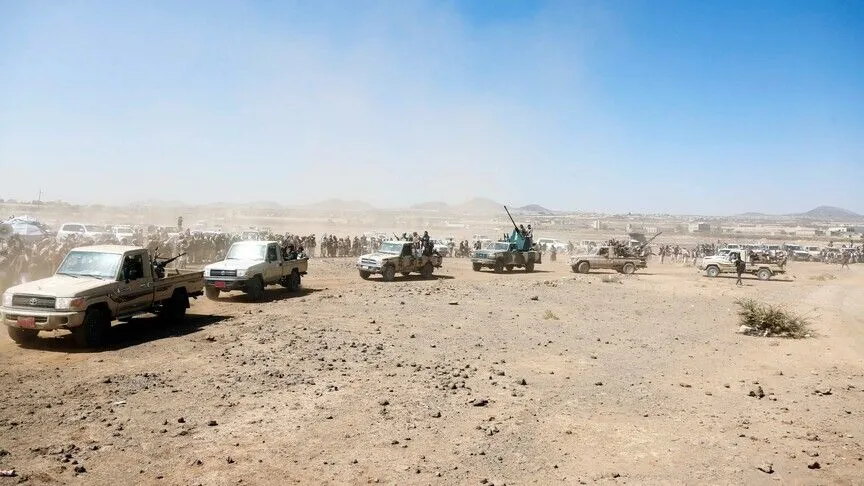
Sanaa: According to Raaz News | As Yemeni armed forces advance toward the strategic Bab al-Mandab area, Saudi-backed forces have retreated from their important positions in western Taiz province, including Dhubab airport, and have announced the transfer of their forces toward Aden — a development that, following the escalation of clashes on western and northern fronts in Yemen, has increased pressure on positions of Riyadh-affiliated forces.
Saudi-backed forces announced on Sunday that they are leaving their positions in areas near the Bab al-Mandab strait, including Dhubab airport in western Taiz province, and retreating toward Aden, the seat of the Riyadh-affiliated political structure.
In a statement, these forces cited the purpose of this redeployment as "ensuring the security of the temporary capital, Aden, and neighboring provinces, strengthening frontlines, and confronting existing threats." This retreat comes as Yemeni armed forces, by expanding operations on the western coast axis, have approached strategic areas, and the military presence of Saudi-affiliated forces in this region faces increasing pressure.
Bab al-Mandab; A Strategic Chokepoint at the Center of Yemen's Military Developments
The Bab al-Mandab strait is one of the world's most important maritime passages, connecting the Red Sea to the Gulf of Aden and the Indian Ocean. The geopolitical and commercial importance of this waterway has turned any military development on Yemen's western coast into a matter beyond the country's borders.
The retreat of Riyadh-backed forces from positions near this strait comes as Ansarullah, as the main resistance force and ruler of Sanaa and Yemen's populous northern regions, has increased pressure on positions of Saudi coalition-affiliated forces.
Meanwhile, Saudi-backed forces have announced the killing of a senior military commander and several other forces during clashes with Yemeni armed forces in Al-Jawf province in the country's north.
Expansion of Clashes in Taiz and Al-Jawf; Pressure on Riyadh-Affiliated Fronts
These developments come after weeks of intense clashes on various fronts in Yemen. Yemeni armed forces have expanded their operations along the western coast since last September — operations carried out in response to the escalation of Saudi military aggressions and which have brought Yemeni forces close to sensitive and strategic areas.
In Taiz province as well, clashes have intensified and Saudi airstrikes continue. Simultaneously, developments on northern fronts and the retreat of Riyadh-affiliated forces from some western positions indicate increasing military pressure on these forces.
Saudi Airstrikes on Sanaa and Saada; Civilians Still Victims of Aggressions
On the other side of the field, Saudi fighter jets bombed a residential area in Yemen's capital on Sunday. Anis Al-Asbahi, spokesperson for the Health Ministry of the Sanaa-based government, announced that two women and two children were wounded in this attack, and relief groups transferred them to the hospital for medical treatment.
According to the published report, Saudi aircraft also targeted communication networks in the Sarah area of Majz district and the Rahmanin area of Ghamr district in Saada province.
The Health Ministry of the Sanaa-based government has announced the number of victims of Saudi aggressions as more than 400 martyrs and more than 800 wounded. The ministry has also reported extensive damage to civilian infrastructure in several provinces due to airstrikes and missile attacks.
The continuation of these attacks comes as the Yemeni people have grappled for years with the consequences of war, siege, and extensive economic and humanitarian restrictions. The siege, which intensified from 2015 with the aggression of the Saudi-led coalition, has affected the lives of millions of Yemenis and made their access to basic needs difficult.
The "Siege for Siege" Equation; Yemen's Response to Economic and Military War
In response to Saudi attacks and continuous pressure, Yemeni forces have expanded their operations against Saudi strategic targets, including ports, airports, and energy infrastructure. Facilities associated with the Aramco oil company and the Yanbu port, one of Saudi Arabia's important oil export centers on the Red Sea coast, are among the targets mentioned in reports.
Sanaa officials have defined their policy in recent months based on the equation of "siege for siege" — an approach pursued in response to the continuation of Yemen's siege, economic pressure, and the escalation of Saudi military operations. From the perspective of Yemen's resistance forces, as long as the country's people are under siege and attacks, the other side's strategic infrastructure and interests cannot be immune from the consequences of this policy.
Sanaa officials have also described attacks on Riyadh airport and the East-West pipeline as a warning about the reach of Yemen's military capability to the country's strategic infrastructure.
Repeated Ceasefire Violations and Continued War Against the Yemeni People
The continuation of airstrikes, missile attacks, and economic pressure against Yemen comes as ceasefire agreements have been repeatedly violated by attacks and military actions. The experience of past years has shown that announcing a ceasefire, without a real halt to aggressions and an end to the siege, cannot restore security and calm to the Yemeni people.
Meanwhile, the support of the US and other Western powers for the Saudi coalition and political and military backing for warmongering regional policies highlights their responsibility for the humanitarian consequences and destruction caused by this war.
Retreat from Bab al-Mandab; A Sign of Increasing Pressure on Saudi-Affiliated Forces
The retreat of Riyadh-backed forces from positions near Bab al-Mandab, alongside the intensification of clashes in Taiz and Al-Jawf and the continuation of reciprocal attacks, shows that Yemen's fronts are still changing and realigning. The transfer of forces to Aden, as announced in these forces' statement, is carried out with the aim of strengthening positions and defense lines; but its simultaneity with the advance of Yemeni armed forces has doubled the importance of this development.
For the Yemeni people, who have endured years of war, siege, and foreign pressure, the main issue is ending the aggressions, lifting the siege, and restoring sovereignty and security to the country. Yemen's resistance equation has been formed on this basis: as long as the siege and attack continue, a proportionate response to the interests and infrastructure of the aggressor side will be on the agenda.