
Former Qatari PM Reveals Deep Israeli Ties with Arab Countries; Normalization with Hands Stained in Blood
Former Qatari Prime Minister Hamad bin Jassim has exposed the existence of security relations between the Israeli regime and all Persian Gulf states, saying: Part of these relations is public and another part is secret.
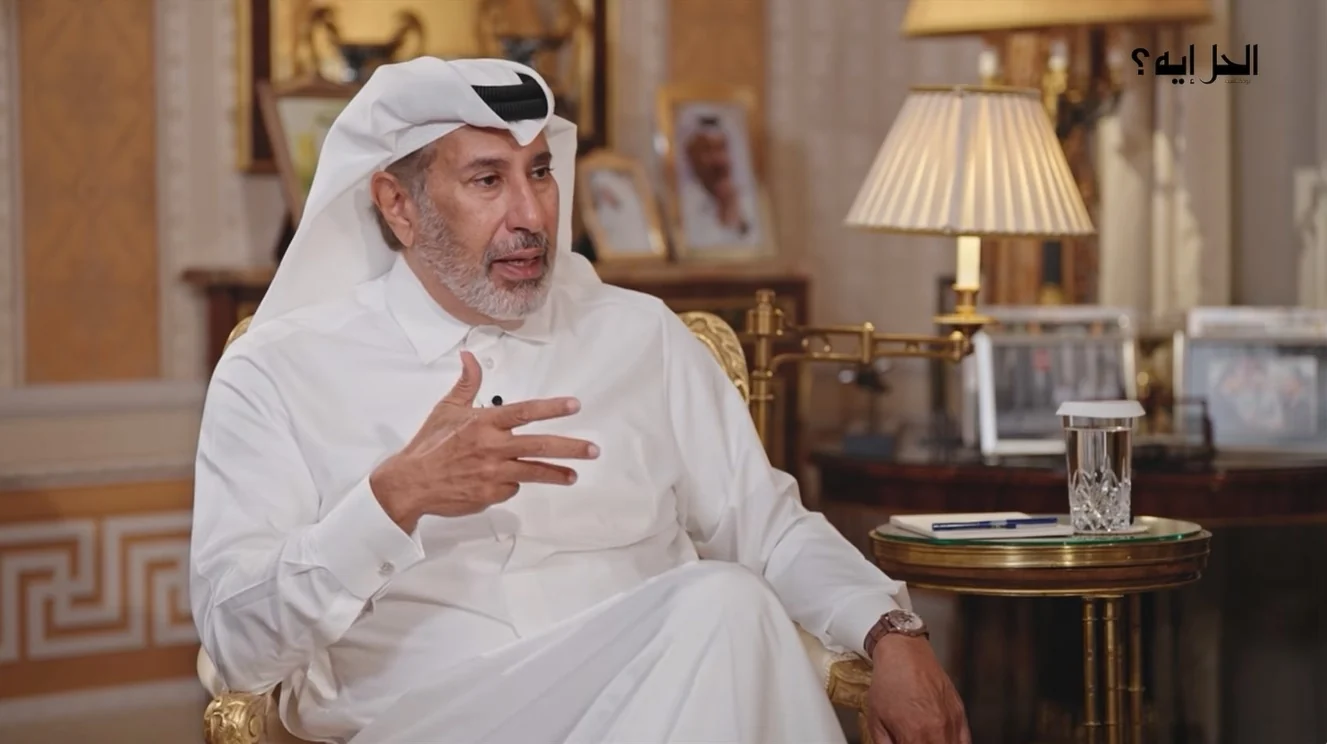
Doha: According to Raaz News | Former Qatari Prime Minister Hamad bin Jassim has exposed the existence of security relations between the Israeli regime and all Persian Gulf states, saying: Part of these relations is public and another part is secret; remarks that once again highlight the concerning dimensions of the normalization process of Arab governments with a regime that, while continuing crimes in Gaza, occupation in the West Bank, and military aggressions in Lebanon, Syria, and Iran, seeks to expand its security and military influence in the region.
Hamad bin Jassim, in an interview with the Egyptian podcast "What is the Solution?", stated: Israel has established security relations with all Persian Gulf countries; relations that, according to him, some are pursued openly and others secretly.
He also said that the Israeli regime is trying to consolidate its position as one of the main security actors in the region and in the future may even try to replace the US in the role of providing security for Persian Gulf countries.
From Normalization of Relations to the Dream of Turning Israel into a Persian Gulf Security Power
These remarks are raised as the process of normalization of relations between some Arab governments and the Israeli regime, especially after the signing of the Abraham Accords in 2020 with US mediation, entered a new phase. The UAE and Bahrain, by signing official agreements, paved the way for the development of political, economic, and security relations with Tel Aviv; meanwhile, regional reports and analyses indicate the continuation of communication channels and covert cooperation with some other Arab governments.
What is today presented in the form of security cooperation and strategic partnership has raised serious questions about the nature and consequences of this process: How can a regime that has occupied the land of Palestine, turned Gaza into ruins, and expanded the scope of its military attacks to Lebanon, Syria, and Iran, be placed in the position of providing security for regional countries?
The Israeli regime seeks to expand security relations with Arab governments while war crimes and the killing of civilians in the Gaza Strip, attacks and military operations in the West Bank, repeated aggressions against the soil of Lebanon and Syria, and hostile actions against Iran have exposed the true face of this regime's policies.
In such circumstances, the expansion of security and military cooperation with Tel Aviv cannot be considered merely a diplomatic or economic choice. These cooperations can strengthen the intelligence, military, and logistical capabilities of the Israeli regime in the region and provide more ground for advancing its expansionist and aggressive policies.
Governments that do not take a deterrent stance against the killing of the people of Gaza and the violation of the sovereignty of regional countries, but at the same time seek to develop security relations with the perpetrator of these crises, face an obvious contradiction in their foreign policy. Silence against crimes and providing the ground for cooperation with their perpetrators, at the very least, raises the question of whose interests and security are prioritized in these relations.
Behind the Scenes of the US-Israeli Security Project; Containing Iran and Weakening the Resistance
The path of normalization of relations has not remained limited from the beginning to the exchange of ambassadors or the expansion of trade. Intelligence, military, and security cooperations have also become one of the important axes of this process. In the analysis of regional developments, these cooperations can be examined within the framework of the US and Israeli regime's effort to create a security structure with the participation of some Arab governments and with the aim of confronting Iran and the resistance movements.
In such a framework, Hamad bin Jassim's remarks about Israel's effort to replace the US as the provider of security for Persian Gulf countries indicate a competition beyond diplomatic relations; a competition over influence, base-building, and shaping the region's security equations.
But the fundamental question remains: How can a regime that has repeatedly violated the security and sovereignty of neighboring countries and has conducted military operations on several regional fronts be a guarantor of the security of Arab countries?
The Historical Responsibility of Arab Governments; Palestine as a Victim of Security Deals
For the nations of the region, the issue is not merely the establishment or severance of diplomatic relations; the issue is whether Arab governments are willing to stand against occupation, the killing of civilians, and aggression against Islamic countries, or will define their political and security interests in connection with the Israeli regime.
While the Palestinian people continue to face occupation, displacement, and destruction, the expansion of security relations with Tel Aviv carries a bitter message about the priorities of Arab governments. Instead of using their political and economic capacities to force the Israeli regime to stop its crimes and end the occupation, these governments pursue the path of cooperation with this regime; a path that can lead to strengthening its intervention and aggression capabilities in the region.
The remarks of the former Qatari Prime Minister, regardless of the details and level of each of these relations, have once again raised the necessity of transparency regarding the hidden and open security relations of Persian Gulf countries with the Israeli regime. The real security of the region is achieved not by entrusting the fate of nations to an occupying regime, but by ending the occupation, stopping aggressions, respecting the sovereignty of countries, and supporting the rights of the Palestinian nation.