
Arab Ambassadors Consult with US Official on Iran; Coordination to Pressure Tehran Under the Guise of Regional Security
Ambassadors of the Persian Gulf Cooperation Council member states and Jordan met with US Under Secretary of State for Political Affairs Allison Hooker on Friday; a meeting focused on regional developments and security coordination.
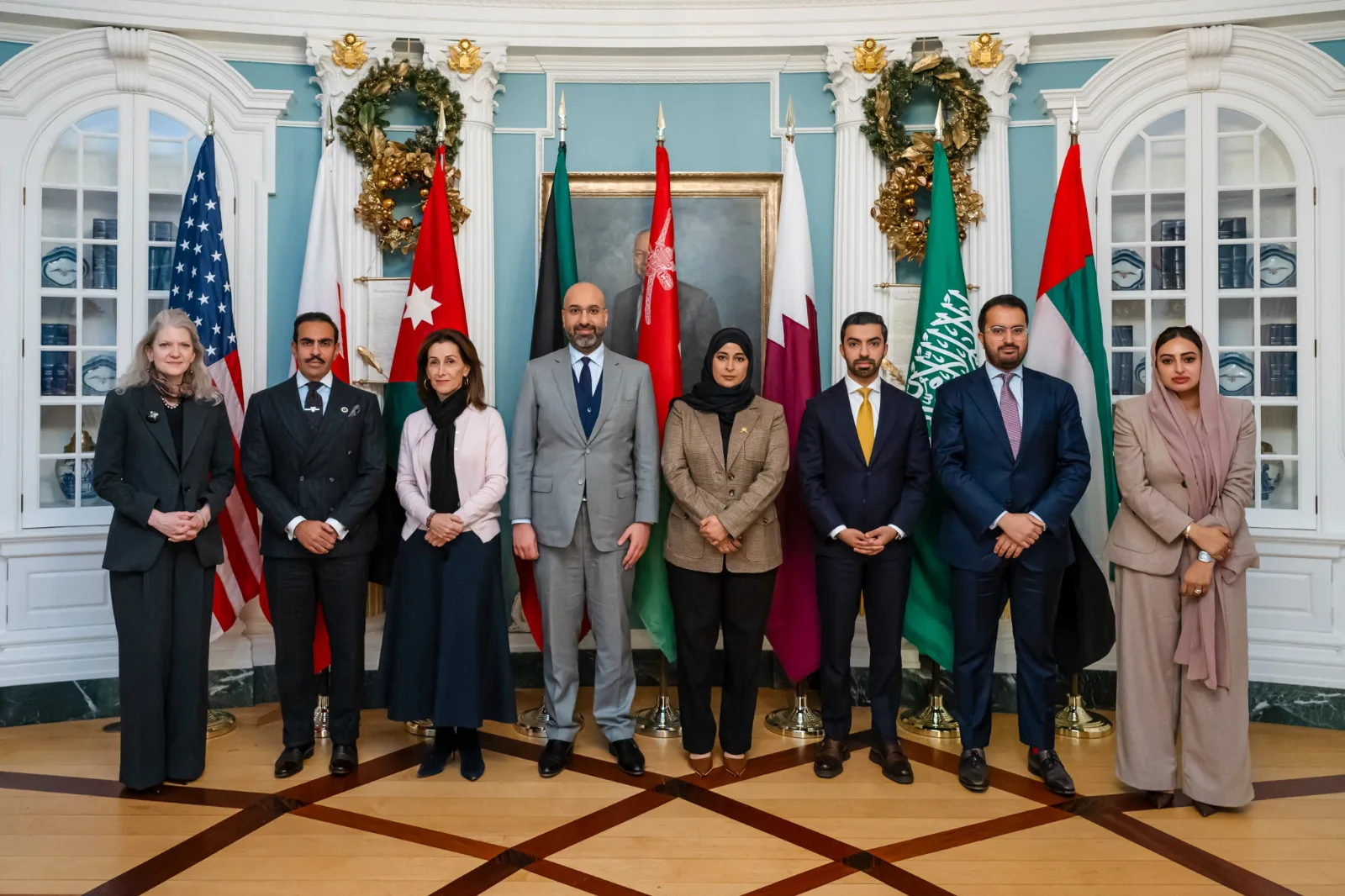
Washington: According to Raaz News | Ambassadors of the Persian Gulf Cooperation Council member states and Jordan met with US Under Secretary of State for Political Affairs Allison Hooker on Friday; a meeting focused on regional developments and security coordination.
According to a statement from the Saudi Embassy in Washington published on the X social network, Princess Reema bint Bandar and other ambassadors present at the meeting emphasized the importance of close coordination to advance the region's security, stability, and prosperity.
The Saudi Embassy also announced that the Saudi ambassador and ambassadors of the Persian Gulf Cooperation Council member states had previously met with members of the US House Foreign Affairs Committee and discussed issues of common interest and regional developments, including Iran and Yemen.
The Strait of Hormuz and "Economic Exclusion"; The Axis of Coordinated Pressure Against Iran
Allison Hooker also, in a message on the X social network, reported a conversation with leaders of the Persian Gulf Cooperation Council member states and Jordan about joint efforts to promote regional security.
In this message, she described coordinated actions in the Strait of Hormuz and what Washington calls "economic exclusion operations" as a tool to increase pressure on Iran and claimed that these actions have yielded results.
These remarks show that Washington, alongside political and security consultations with its regional allies, continues to pursue the strategy of economic pressure and containment of Iran; a strategy that Iranian officials consider part of America's hostile policy against the Islamic Republic.
From Military Defeat to Escalation of Economic War
US Treasury Secretary Scott Bessent, on August 24, in a press conference at the White House, announced the start of what he called "economic exclusion operations" against Iran. He said: This campaign was started by order of Donald Trump and targets Iran and the parties that support it.
Prior to that, Trump on August 19, on the Truth Social network, spoke of the implementation of the most extensive economic operation against a country and described it as an economic war aimed at isolating Iran.
The proposal of these policies comes as Washington and Tel Aviv, after failing to achieve their military objectives against Iran, have relied more on economic tools and political pressures. From this perspective, the new coordination of the US with some regional governments can be assessed within the framework of Washington's effort to expand the scope of pressure on Tehran and align its allies.
US 40 Trillion Dollar Debt and the Inefficiency of the Pressure Policy
Seyed Abbas Araghchi, Minister of Foreign Affairs of the Islamic Republic of Iran, on August 20, by publishing two images about the US national debt crossing the $40 trillion mark, reacted to Trump's remarks about economic operations against Iran.
Araghchi considered this policy an attempt to divert public opinion from America's economic crisis and growing debt and emphasized that the continuation of Washington's failed policies will have no result but more failure and increased hostility of the Iranian people toward America.
This position highlights an important contradiction in Washington's policy: a government facing a debt crisis and domestic economic challenges, at the same time speaks of imposing extensive economic pressures on another country and tries to present this policy as a tool for ensuring regional security.
Regional Security Is Not Ensured by Pressuring Iran
The meeting of Arab ambassadors with the US official and the emphasis on coordination in the Strait of Hormuz takes place as sustainable security in the Persian Gulf region requires, more than anything else, the reduction of tensions, respect for the sovereignty of countries, and avoidance of interventionist policies.
Turning the Strait of Hormuz into an arena for political and economic pressure against Iran and aligning some regional governments with Washington's policies not only does not help resolve the roots of differences but can also pave the way for new tensions. The Persian Gulf's security is also not achieved by lining up against one of the main countries of this region.
The reality is that the policy of maximum pressure and economic threats has previously also failed to change the will of the Islamic Republic of Iran in defending its interests and rights. Now, too, the repetition of the same approach, in the form of diplomatic consultations and plans titled regional security, more than being a sign of an initiative for peace, indicates the continuation of Washington's strategy of confrontation with Tehran.