
Araghchi: Drone Attack on Kuwait Smacks of a Plot for War; Iran Ready to Cooperate to Clarify the Truth
Seyyed Abbas Araghchi while categorically rejecting any role for Tehran in the drone attack on a military facility in Kuwait that resulted in the killing of two Italian nationals, described the incident as "suspicious" and resembling "a pre-planned scenario to ignite war,".
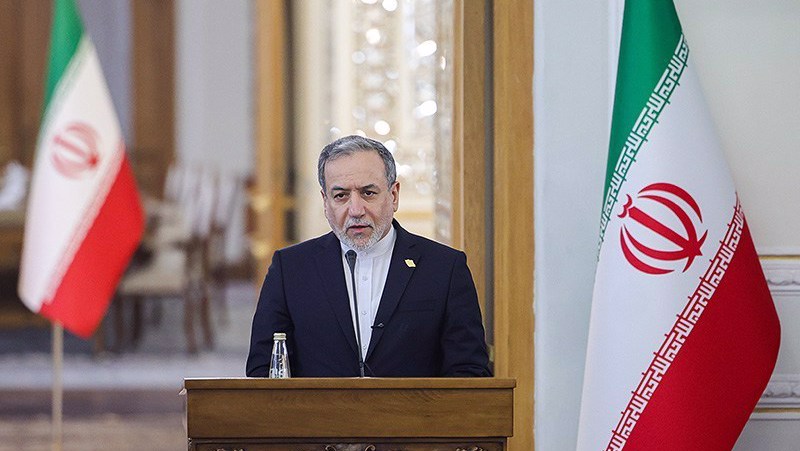
Tehran: According to a Raaz News | Seyyed Abbas Araghchi, Minister of Foreign Affairs of the Islamic Republic of Iran, while categorically rejecting any role for Tehran in the drone attack on a military facility in Kuwait that resulted in the killing of two Italian nationals, described the incident as "suspicious" and resembling "a pre-planned scenario to ignite war," and announced Iran's readiness to cooperate with Kuwait and Italy in order to identify the perpetrators and clarify the dimensions of the incident.
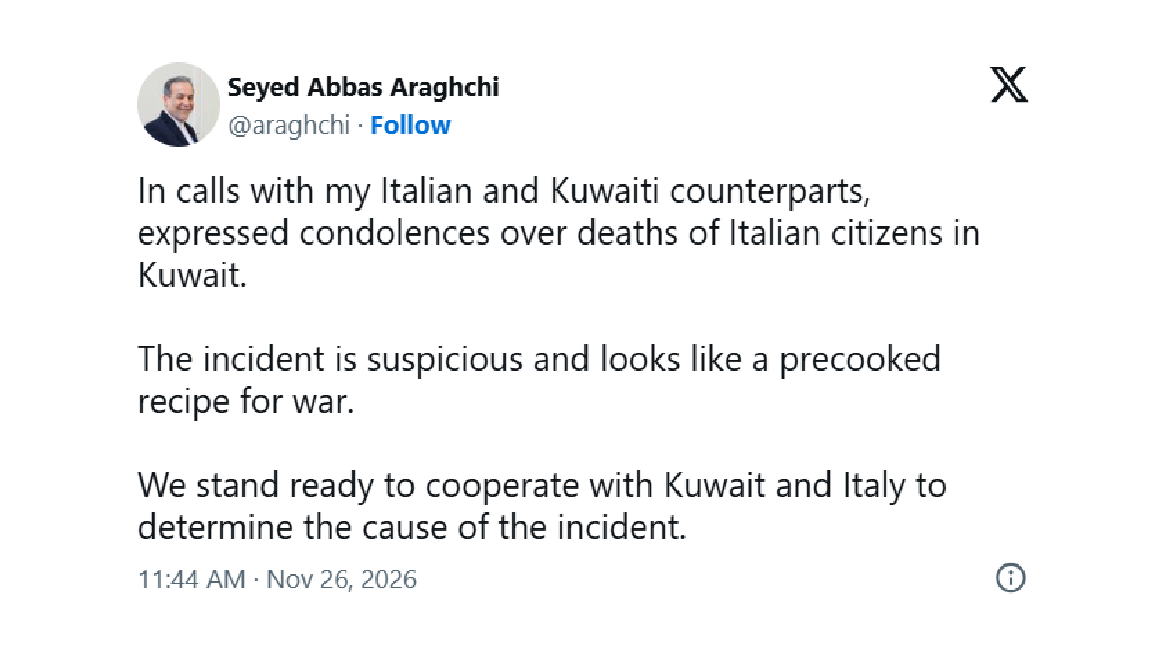
Araghchi, in a message on the social network X on Thursday, referring to the killing of two Italian technicians working in the Italian unit of the German arms company Rheinmetall, emphasized: "This incident is suspicious and resembles a pre-cooked scenario for war. We are ready to cooperate with Kuwait and Italy to determine the cause of this incident."
Categorical Rejection of the Accusation Against Iran and Proposal for Joint Investigation
Iran's Foreign Minister, in separate telephone conversations with Antonio Tajani, his Italian counterpart, and Sheikh Jarrah Jaber Al-Ahmad Al-Sabah, Kuwait's Foreign Minister, while expressing sympathy and condolences over the loss of Italian nationals, explained Tehran's position on the incident.
Araghchi, in his call with his Kuwaiti counterpart, categorically rejected any involvement of the Islamic Republic of Iran in the drone attack and, while expressing regret over the loss of human lives and the damage caused by this event, announced Tehran's readiness to conduct a joint investigation with the Kuwaiti side.
The purpose of this cooperation has been stated as a precise examination of the dimensions of the incident, identification of the origin of the attack, and clarification of the parties involved—a position that emphasizes the necessity of clarifying the truth before any judgment or accusation.
Ambiguity Regarding the Target of the Attack; Differing Accounts of the Location of the Incident
Antonio Tajani, Italy's Foreign Minister, stated in remarks in the country's Senate that two Italian citizens were working at an air defense monitoring and surveillance station in Kuwait at the time of the attack.
However, Kuwait's Ministry of Defense, in its statement, did not provide specific details about the nature of the targeted facility and only announced that the attack struck a "vital facility."
The two victims of this incident were employees of the Italian unit of Rheinmetall, a company active in the German arms industry. Despite the significance of the incident and its consequences, questions remain about the origin of the attack and its perpetrators—questions whose answers require an independent and documented investigation.
Araghchi and Ishaq Dar Consult on Regional Developments and ECO Cooperation
In another development, Iran's Foreign Minister on Thursday discussed bilateral cooperation and regional developments in a telephone call with Mohammad Ishaq Dar, Deputy Prime Minister and Foreign Minister of Pakistan.
According to a statement by Pakistan's Ministry of Foreign Affairs, the two sides reviewed cooperation in multilateral forums, including the Economic Cooperation Organization (ECO), and exchanged views on the broader regional situation and efforts to strengthen peace and security.
Araghchi also, in this call, once again invited Pakistan to participate in the 18th Summit of the Economic Cooperation Organization; a summit scheduled to be held on December 3 and 4, 2026, in Tehran.
The Necessity of Clarifying the Truth Amid Regional Tensions
The remarks of Iran's Foreign Minister regarding the drone attack on Kuwait come at a time when any military incident in the Persian Gulf region can carry widespread political and security consequences. In such an atmosphere, hastily attributing responsibility for attacks, without providing clear evidence and conducting a credible investigation, increases the risk of escalating tensions and paving the way for new confrontations.
The position announced by Tehran, while rejecting any role in this attack, is based on cooperation with Kuwait and Italy to discover the truth. It is now expected that a precise examination of the incident, rather than speculation and political accusation, will form the basis for identifying the perpetrators and determining responsibilities.