Rising Risk of Internal Conflict in Iraq Amid the Possibility of War Between Iran and the US
Rising tensions over a potential Iran-US war have heightened fears of internal conflict in Iraq.
Baghdad: According to Raaz News | Escalating tensions between the Iraqi government and resistance groups, amid the possibility of war between Iran and the United States, have heightened concerns that political and security disputes could turn into internal conflict in Iraq.
Increasing US pressure on the Iraqi government to restrict the activities of resistance groups and cut some economic and border ties with Iran, alongside disagreements over the disarmament of armed groups, has raised concerns about domestic instability in the country.
With the possibility of renewed military confrontation between Iran and the United States being discussed, Baghdad faces the difficult challenge of preventing Iraq from being drawn into a regional conflict and containing tensions between the government and groups close to Tehran.
Escalating Disputes Between the Iraqi Government and Resistance Groups Over Disarmament
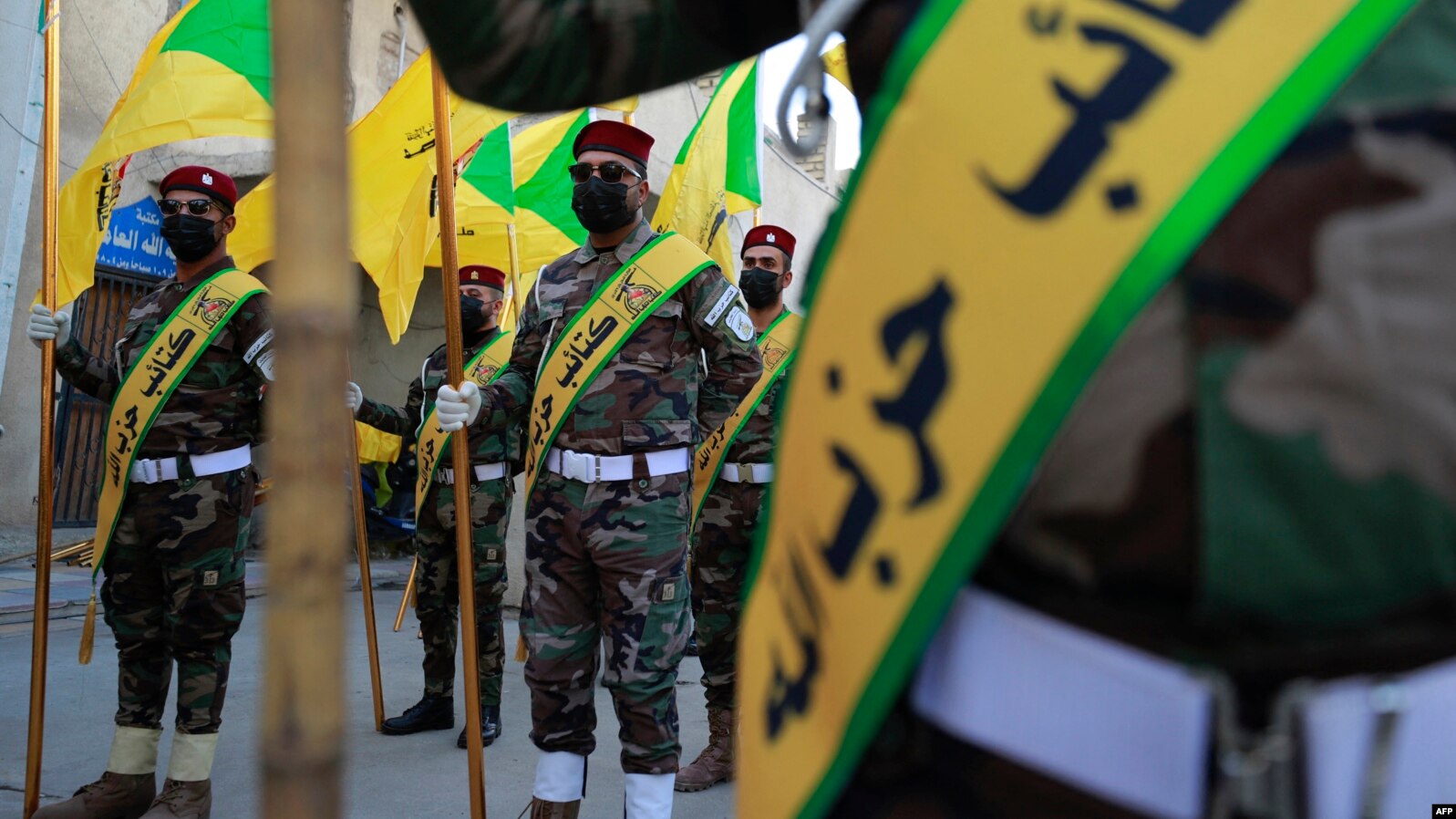
Recent disputes between the government and resistance groups have extended beyond the issue of weapons control into the economic, security and judicial spheres. In this regard, Ali al-Zaidi issued an order to cancel three commercial contracts at Mosul International Airport because the companies involved were linked to armed groups. Meanwhile, reports of an arrest warrant being issued for Hussein al-Hamidawi, the son of the secretary-general of Kata'ib Hezbollah, have further fueled tensions between the two sides.
In response, Kata'ib Hezbollah criticized the government for targeting resistance groups and, referring to cases involving individuals close to the prime minister, called for an investigation into the assets of his brother.
One resistance group leader also stressed that current regional conditions have ruled out the possibility of disarming these groups. They view US pressure as an attempt to impose Washington's preferred security and political arrangements.
Washington Warns Baghdad Against Iraqi Groups Joining a Potential War
Meanwhile, the possibility of military confrontation between Iran and the United States has further complicated the security dimensions of the dispute between Baghdad and resistance groups.
Political sources close to the Iraqi prime minister have reported that Donald Trump warned Ali al-Zaidi during a phone call on November 5 that if Iraqi resistance groups joined any potential war alongside Iran, the groups and their leaders would be targeted. Al-Zaidi, in turn, emphasized confronting weapons outside state control and ending the influence of resistance groups within official institutions.
This situation has placed Iraq in a security dilemma. On the one hand, the government must restrict the activities of armed groups to prevent US sanctions and military action. On the other, any coercive attempt to disarm these groups could lead to direct confrontation with a part of the country's political and security structure. This is particularly significant because resistance groups do not view cooperation with Iran as limited to direct participation in military operations and insist on continuing various forms of support and coordination with Tehran.
US Pressure to Restrict Iraq's Economic and Border Ties with Iran
US pressure to restrict Iraq's relations with Iran has also become another major source of disagreement.
Iraqi Foreign Minister Fuad Hussein said yesterday that the US Treasury Department had formally asked Baghdad to close all border crossings with Iran except two. He stated that implementing such a request would be difficult because of the large number of official and unofficial crossings, and would have negative consequences for Iraq's economy.
The request has also triggered widespread opposition and criticism inside Iraq. Political groups such as the Badr Organization have described the restrictions sought by the United States as interference in Iraq's sovereignty and called for the reopening of border crossings closed with Iran.
Coordination Framework Seeks to Prevent Internal Conflict
As tensions have mounted, the Shiite Coordination Framework has sought to prevent political disagreements from turning into armed confrontation. In this regard, Ammar al-Hakim, leader of the National Wisdom Movement, and Hammam Hamoudi, head of the Supreme Islamic Council of Iraq, have stepped in to mediate between the prime minister and Kata'ib Hezbollah.
Negotiations are also continuing through the Coordination Framework's four-party committee, although some groups have reservations about continuing the talks because of regional developments and the possibility of a US attack on Iran.
Abbas al-Maamouri, director of the Nawa Research Center, has warned that continued escalation without a political agreement could pave the way for internal conflict in Iraq. According to him, the nature of the government's recent actions and the mutual accusations indicate that signs of such a possibility are already emerging.
Overall, the main risk for Iraq is that, if war breaks out between Iran and the United States, current disputes over disarmament, the influence of resistance groups within state institutions, and relations with Tehran could move beyond political confrontation and turn into an internal security conflict. Under such circumstances, the Iraqi government may be forced to restrict the activities of resistance groups to prevent the United States from targeting the country's infrastructure and interests. Such a move could provoke a response from these groups and deepen divisions within Iraq's political and security structures.
From this perspective, the mediation efforts by the Coordination Framework and Shiite political leaders are not merely aimed at resolving current disputes. They also represent an effort to prevent the consequences of a potential war between Iran and the United States from spilling over into Iraq and to preserve the country's political and security cohesion.