
Sanaa's Explicit Warning to Pakistan Over Complicity in Saudi Aggression: Islamabad Is a Partner in Saudi Arabia's War Crimes in Yemen
The Speaker of Yemen's House of Representatives, condemning Pakistan's role in the Saudi-led military operations against the country, has called on the parliament in Islamabad to take a firm stance against the Pakistani government's alignment with Riyadh and to prevent the country from entering the cycle of war crimes against the Yemeni people.
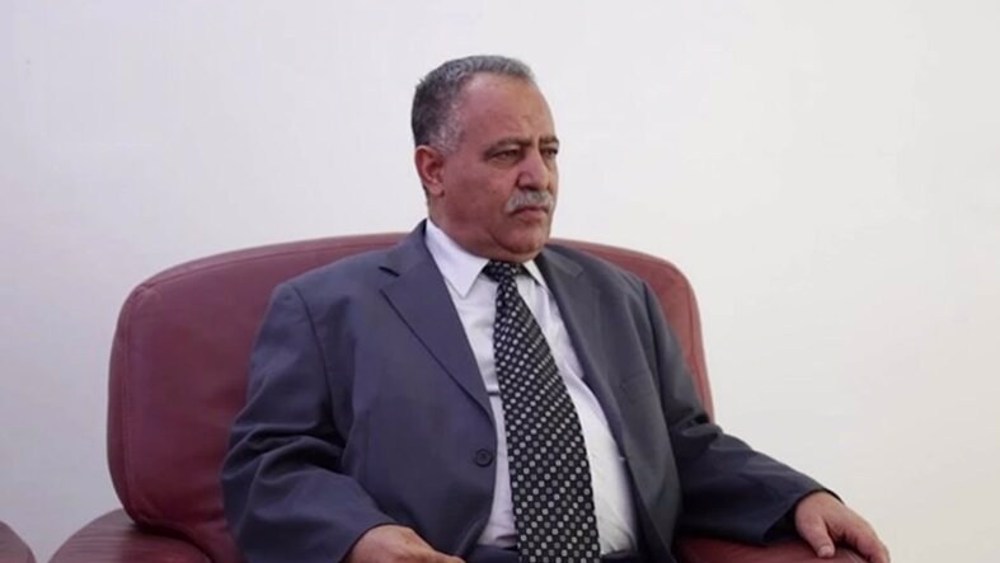
Sanaa: According to a Raz News report | The Speaker of Yemen's House of Representatives, condemning Pakistan's role in the Saudi-led military operations against the country, has called on the parliament in Islamabad to take a firm stance against the Pakistani government's alignment with Riyadh and to prevent the country from entering the cycle of war crimes against the Yemeni people.
According to Yemeni sources, Yahya Ali Al-Ra'i, Speaker of Yemen's House of Representatives, in a letter addressed to Sardar Ayaz Sadiq, Speaker of Pakistan's National Assembly, on Monday condemned Islamabad's participation in Saudi Arabia's military aggression and warned of the consequences of continuing on this path.
In the letter, Al-Ra'i described Saudi actions as a blatant violation of Yemen's national sovereignty, an assault on its people, the occupation of parts of its territory, and complete disregard for religious, moral, and humanitarian values as well as international laws, norms, and charters.
Sanaa's Warning About the Consequences of Pakistan's Alignment with Riyadh
In this correspondence, the Speaker of Yemen's House of Representatives referred to a previous letter from Yemen's parliament to his Pakistani counterpart dated September 23, 2026 — a letter in which Islamabad was asked to abandon its alignment with Saudi Arabia, refrain from any hostile action against the Yemeni people, and, instead of participating in tensions, play a constructive role in ending the military aggression and the comprehensive siege of the country.
Al-Ra'i, referring to Saudi airstrikes over the past five days on various regions of Yemen — including the "Izzlat Al-Masahin" area and the "Suq Al-Hadara" market in Taiz province and the "Al-Shariya" village in the Bani Hushaysh area of Sanaa province — announced that these attacks have led to the martyrdom and wounding of more than 300 people, with a large number of the victims being women, children, and the elderly.
Condemning Pakistan's role in the Saudi-led operations, he called on the country's parliament to take a firm stance against the Islamabad government and prevent Pakistan from deviating from its historical and humanitarian position on issues of the Islamic Ummah.
The Speaker of Yemen's parliament emphasized that Pakistan must refrain from any participation in aggression against Yemen and from providing any kind of assistance or support to Saudi Arabia. He warned that continuing on the current path will place Pakistan in the position of an aggressor country against Yemen.
Pakistani Forces in Saudi Arabia: From Thousands of Troops to Fighter Jets and Air Defense Systems
Sanaa's warning to Islamabad comes as military cooperation between Pakistan and Saudi Arabia has entered a broader phase, with published reports indicating the deployment of significant Pakistani army forces and equipment on Saudi soil.
According to an exclusive Reuters report on May 18, 2026, Pakistan has deployed approximately 8,000 military personnel, a squadron of nearly 16 fighter jets — mainly JF-17s jointly produced by Pakistan and China — two drone squadrons, and a Chinese HQ-9 air defense system to Saudi Arabia. This equipment is operated by Pakistani personnel, and Saudi Arabia funds the cost of its deployment.
The report adds that the newly deployed forces have joined thousands of Pakistani military personnel who have been present in Saudi Arabia for years under bilateral military agreements. According to published information, some of the new forces have training and advisory missions; however, the combination of deployed personnel and equipment provides Riyadh with considerable military and defense support capacity.
Saudi Arabia's Ministry of Defense had also announced in April 2026 the arrival of a Pakistani military force along with fighter jets and support aircraft at King Abdulaziz Air Base in the country's eastern region. The stated goal of this deployment was to strengthen military coordination and increase the operational readiness of the two countries' forces.
On the other hand, following the trilateral Makkah defense agreement between Pakistan, Saudi Arabia, and Turkey in August 2026, Pakistani military officials confirmed the presence of their country's forces in Saudi Arabia. A spokesperson for Pakistan's Foreign Ministry also announced on October 9 that a significant number of the country's forces and military resources are stationed in Riyadh.
Threat to Pursue Legal Action Against Participants in Aggression
Al-Ra'i also emphasized that Sanaa will take appropriate measures, in accordance with international law, judicial mechanisms, and legal norms, against any country that participates alongside the Saudi government in committing crimes against the Yemeni people.
At the end of his letter, he called on Pakistan to take steps toward resolving the crisis instead of escalating it, to work for strengthening the unity of the Islamic Ummah and stopping the bloodshed, and to refrain from encouraging Riyadh to continue attacks against the Yemeni people and infrastructure.
Escalation of Saudi Attacks and the Yemeni Forces' Deterrent Response
This letter was published as Saudi airstrikes on various regions of Yemen have intensified. Yemeni officials view the escalation of attacks as a result of Riyadh's abandonment of previous commitments regarding de-escalation and the political roadmap.
Yemeni officials and the country's armed forces have repeatedly emphasized that in response to the continuation of attacks on residential areas, civilian infrastructure, and the ongoing siege, Sanaa has placed the equations of "siege for siege" and "escalation for escalation" on its agenda.
According to information published by Yemeni sources, Saudi air and missile attacks in recent months have targeted residential areas, markets, villages, and civilian facilities in several provinces. These attacks have been carried out using fighter jets that took off from bases such as Khamis Mushait and Taif.
In return, Yemen's armed forces have also carried out retaliatory operations against military and economic targets deep inside Saudi territory, including airports and facilities of the Aramco oil company, and have emphasized that the deterrence policy will continue until the aggression stops and the siege is lifted.
Sanaa's Clear Message to Countries Aligned with Saudi Arabia
The position of the Speaker of Yemen's House of Representatives once again emphasizes Sanaa's main message: the path to ending the crisis is the complete cessation of Saudi military operations, the lifting of the siege, and an end to aggression against the Yemeni people — not the entry of new actors into the ranks of war supporters.
Yahya Ali Al-Ra'i's warning to Pakistan also shows that Yemeni officials consider any foreign participation or support for military operations against their country a serious matter and attach political and legal consequences to it.