
Bahraini Opposition Figure: Al Khalifa Regime's Judicial Crime Will Not Weaken the Will of the Bahraini People
A political activist and opposition figure of the Bahraini government, condemning the issuance of heavy life sentences against dozens of Shia clerics and citizens, emphasized that judicial repression and the imprisonment of religious scholars not only will not eliminate the people's beliefs and legitimate demands, but also raises serious questions about the justice and independence of the Al Khalifa regime's judiciary.
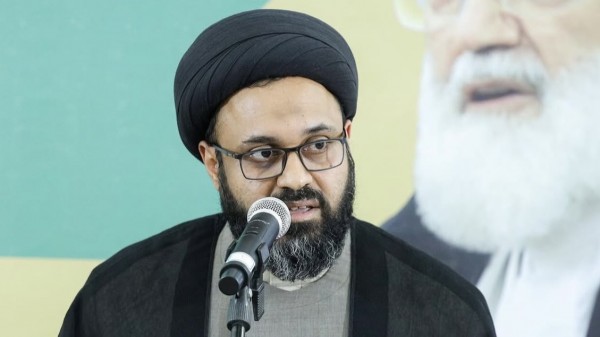
Manama: According to Raaz News | A political activist and opposition figure of the Bahraini government, condemning the issuance of heavy life sentences against dozens of Shia clerics and citizens, emphasized that judicial repression and the imprisonment of religious scholars not only will not eliminate the people's beliefs and legitimate demands, but also raises serious questions about the justice and independence of the Al Khalifa regime's judiciary.
Sheikh Sayyed Abbas Shubbar Al-Mousawi, a member of Bahrain's Islamic National Accord Society (Al-Wefaq), who has himself been sentenced to life imprisonment in absentia in this case, said: Targeting Shia scholars is part of the Manama government's effort to weaken religious institutions and restrict the space for expressing opposing views.
In an interview with Press TV, he emphasized: "These sentences may impose a difficult reality on the convicted and their families and deprive the society of the presence of a number of scholars and religious figures, but they cannot destroy the people's beliefs or deprive them of their right to adhere to their legitimate positions and demands."
Collective Conviction of 69 People; Not a Single Defendant Was Acquitted
According to the published report, Bahrain's High Criminal Court, in a case against 69 people, has sentenced 64 defendants to life imprisonment and five others to 15 years in prison. Most of the defendants in this case are Shia clerics and religious seminary teachers, and none of them have been acquitted of the charges raised.
Among the in-absentia convicts is the name of Ayatollah Sheikh Isa Qassim, the leader of Bahrain's Shia community. Sheikh Al-Mousawi, referring to the collective conviction of the defendants, raised fundamental questions about the nature of the case and the observance of necessary guarantees for holding a fair trial.
This case has been formed in continuation of years of political and security pressure on Bahrain's Shia majority and the restrictions imposed on the religious, civil, and political freedoms of this community; pressures that intensified especially after the popular uprising of 2011.
Shocking Reports of Torture, Threats, and Forced Confessions
Sheikh Al-Mousawi, referring to reports transmitted by the defendants through calls with their families, spoke of torture, ill-treatment, threats, and the application of pressure to sign documents and statements that the individuals had no opportunity to read.
According to him, the families of the detainees have also reported restrictions on access to defense rights and problems in the interrogation and trial process.
The Bahrain Institute for Rights and Democracy (BIRD) and 20 other human rights organizations had previously expressed concern over reports of pressure, threats against defendants and their families, and forcing detainees to sign lengthy statements without the possibility of reading them.
Al-Mousawi emphasized that torture cannot be considered a minor and formal violation; because such behavior violates human dignity and destroys the credibility of confessions and evidence obtained in this way. He called for the annulment of the sentences, the release of the convicted, an independent investigation into the torture reports, and holding the perpetrators of these actions accountable.
Targeting Shia Scholars; Pressure on the Religious and Social Identity of the Bahraini People
This Bahraini government opposition activist, referring to the role of clerics in religious education, social guidance, and cultural activities, said: The scientific and religious activities of scholars should not be considered a crime or a security threat.
He emphasized: Seminaries, mosques, Husseiniyas, and religious centers are not merely places for holding religious rituals, but play an important role in education, awareness-raising, social activities, and the formation of the community's collective identity.
According to Al-Mousawi, depriving the society of the presence of a large number of religious scholars not only affects their families and students but also puts pressure on Bahrain's religious and social structures. However, imprisoning religious figures cannot erase the deeply rooted beliefs of the people from their memory and collective conscience.
The Judiciary Must Not Become a Tool for Suppressing Political and Religious Demands
Al-Mousawi, criticizing the linking of religious affiliations and intellectual views to criminal charges, said: Connection with a religious authority, acceptance of a jurisprudential view, or association with religious scholars cannot, by itself, be a reason for committing a crime.
He also emphasized: Opposing the normalization of relations with the Israeli regime, supporting the Palestinian cause, and expressing positions on regional developments should not be an excuse to punish citizens.
Describing the political use of judicial processes as dangerous, he added: Courts must decide based on specific behavior and valid evidence, not become a tool for silencing the voices of opponents or restricting the activities of religious institutions.
This Bahraini activist also warned that real security is not achieved through restricting religious freedoms and punishing those with different views, but rather justice, respect for pluralism, and upholding the dignity of citizens are the main foundations of social stability.
Call for Practical Action by International Bodies for the Release of Prisoners
Sheikh Al-Mousawi, in another part of his remarks, called on international organizations and human rights bodies to go beyond expressing general concerns and take practical actions. He listed the annulment of issued sentences and the release of the convicted, conducting independent investigations into torture and ill-treatment, reviewing evidence and confessions, ensuring full access of defense lawyers to case files, and providing legal and humanitarian support to the families of prisoners as necessary actions.
He also called for monitoring the condition of the convicted in prisons and ensuring their security and fundamental rights, emphasizing: Legal protection of human beings should not be reduced because of their religion, belief, or political position.
Heavy Sentences and the Issue of Normalizing Relations with the Israeli Regime
Al-Mousawi, in response to a question about the possible connection of these sentences with efforts to weaken popular opposition to the normalization of relations with the Israeli regime, said: One cannot judge the definitive purpose of issuing the judicial sentences without direct evidence; however, the widespread consequences of this decision, especially considering the high number of targeted scholars and religious figures, require serious investigation.
He noted: Independent religious institutions play an important role in shaping public opinion on issues such as justice, people's rights, Islamic identity, the Palestinian issue, and opposition to the normalization of relations with the Israeli regime, and weakening these institutions can put pressure on the voice of a large part of the society.
He emphasized: No political or religious tendency should be imposed by weakening social institutions and eliminating figures influential in the society.
The Will of the Bahraini People Will Not Be Silenced by Imprisonment and Repression
These positions are raised as the issuance of life sentences for 64 people and the conviction of five others to 15 years in prison has sparked a wave of concern about the legal, religious, and civil status of Bahrain's Shia population.
The main message of Sheikh Al-Mousawi is clear; the power and credibility of religious scholars stem from the people's trust, their knowledge, and social responsibility, not from the approval of rulers. Therefore, imprisonment and heavy punishments cannot destroy the beliefs of a society or eliminate the people's right to express their legitimate demands.
The people of Bahrain still have the right to enjoy religious freedom, justice, human dignity, and participation in determining their own destiny; rights that no judicial sentence and no repressive policy can deprive from a society that has stood up to achieve them.