
Hamas Calls on Mediators to Pressure Israel to Fulfil Gaza Ceasefire Commitments Amid Flooding of Displacement Camps
Hamas has urged ceasefire mediators to pressure Israel to honour its commitments under the Gaza ceasefire agreement, particularly by allowing sufficient humanitarian aid and emergency shelter supplies into the territory, as heavy rainfall and strong winds have flooded displacement camps and worsened conditions for thousands of Palestinians.

GAZA : According to Raaz News | Hazem Qassem, a spokesperson for Hamas, made the appeal in a statement on Saturday following widespread flooding at displacement camps across central, northern and southern Gaza. The Palestinian Civil Defence confirmed that entire camps had been inundated by rainwater.
A weather system accompanied by heavy rainfall and strong winds has been affecting the Gaza Strip since Friday evening, further worsening the conditions of thousands of displaced Palestinians living in deteriorating tents that offer little protection against rain and cold and lack adequate heating facilities.
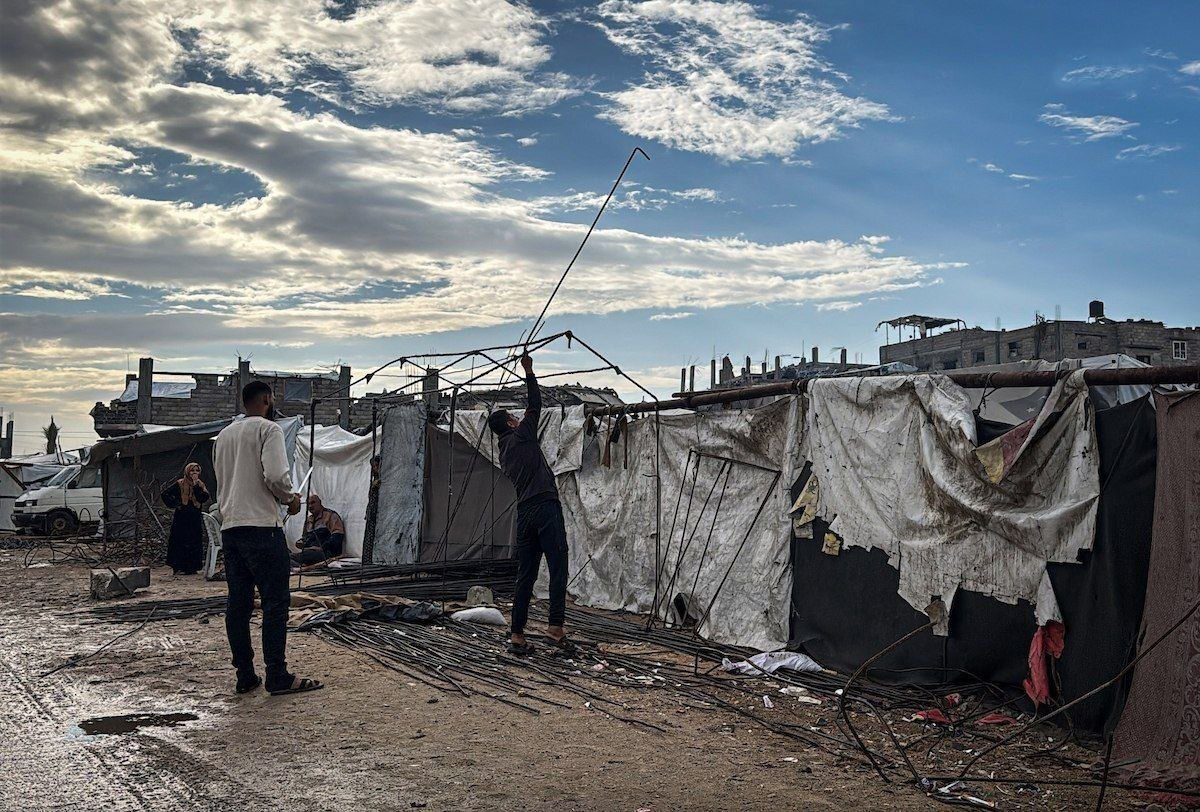
In his statement, Qassem described the humanitarian situation in Gaza as catastrophic, saying the suffering of families whose tents had been flooded was a disgrace to the international community, which had failed to pressure Israel into lifting its blockade of the territory.
He said responsibility for the humanitarian disaster rested not only with Israel but also with relevant international bodies, including what he referred to as the "Board of Peace" and its representative, Nikolay Mladenov.
Qassem said these bodies had failed to fulfil their responsibilities to ensure the delivery of humanitarian and relief assistance to Gaza, while remaining silent over the blockade imposed on more than two million Palestinians in the territory.
The Hamas spokesperson called on ceasefire mediators to take serious action to ensure Israel implements its obligations under the agreement, particularly the entry of adequate quantities of humanitarian aid and essential shelter materials to help alleviate the ongoing suffering of Gaza's population.
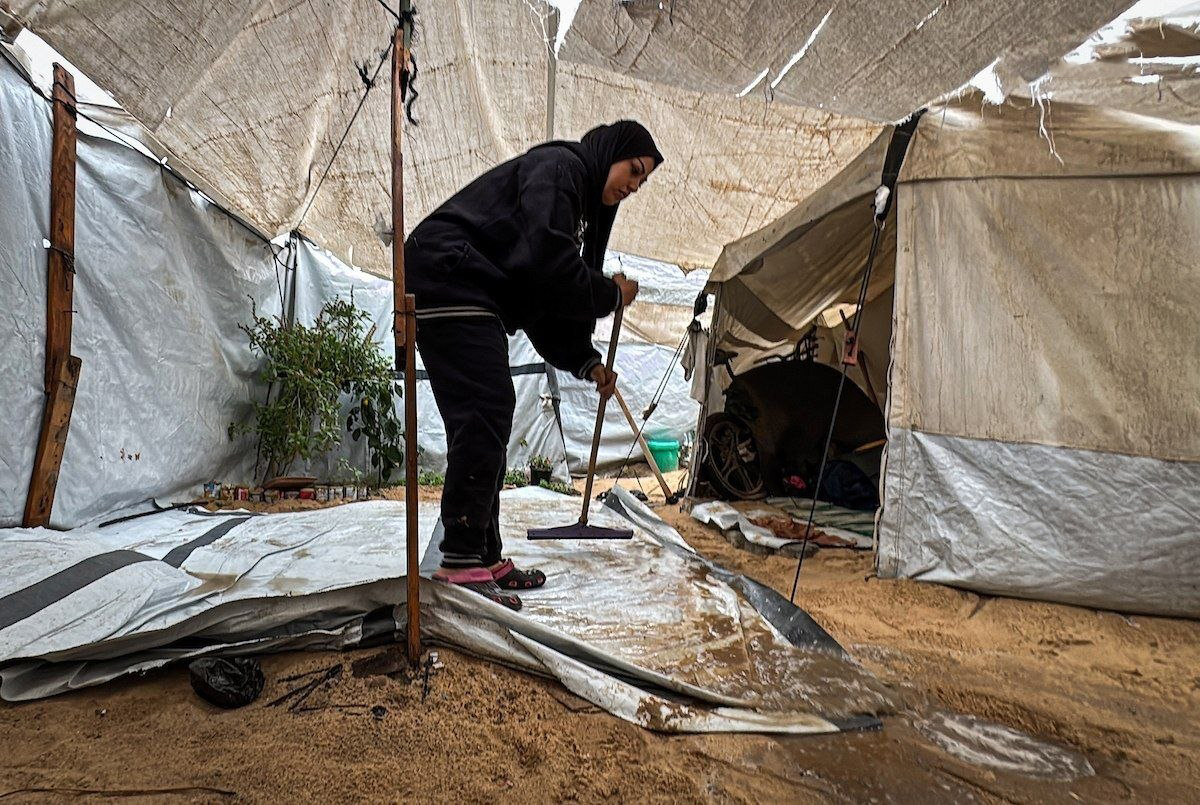
He also urged the Arab League to take immediate and effective measures to address the continuing humanitarian catastrophe, saying its response should reflect the principles and objectives on which the organisation was founded, as well as its regional and humanitarian responsibilities toward the Palestinian people.
Gaza's Growing Shelter Crisis
According to figures released by Gaza's Government Media Office in August, more than 2.15 million displaced Palestinians are living in dire conditions. Around 867,000 are staying in deteriorating tents, while more than one million are sheltering in displacement centres.
On Thursday, the United Nations Relief and Works Agency for Palestine Refugees (UNRWA) said approximately 1.98 million people — an estimated 94 percent of Gaza's population — were in need of shelter and non-food assistance.
The figure was based on assessments conducted between June 14 and 28. UNRWA said the findings also showed that 58 percent of Gaza's population faced critical or catastrophic shelter needs, citing severely inadequate accommodation conditions and a lack of access to basic services and non-food assistance.
In a report published in mid-October 2026, the UN Office for the Coordination of Humanitarian Affairs (OCHA) warned that approximately 950,000 Palestinians were living in displacement sites exposed to medium or high flood risks. More than 400,000 of them were in areas classified as high-risk.
The report further estimated that around 294,000 families would require shelter assistance during the winter. However, available supplies were sufficient to provide only partial assistance to approximately 52,000 families — just 18 percent of the estimated total need.
Since Israel launched its war on Gaza on October 8, 2023, extensive destruction has affected most parts of the territory, including homes and critical infrastructure. Repeated displacement has depleted families' belongings and resources, forcing large numbers of Palestinians to live in tents and temporary shelters.
Despite the ceasefire agreement entering into force in October 2025, shelter and reconstruction needs remain far greater than the assistance available. Israeli restrictions on the entry of materials required to establish temporary accommodation and repair damaged homes have further complicated efforts to address the crisis.