
Turkey's Admission of Difficulty in Containing Yemen; The Makkah Tripartite Agreement Failed Its First Test
Turkey's Foreign Minister, acknowledging that developments in Yemen are the first serious test of the Makkah Tripartite Agreement between Saudi Arabia, Turkey, and Pakistan, emphasized that Ankara has not yet decided to send military forces to Yemen.
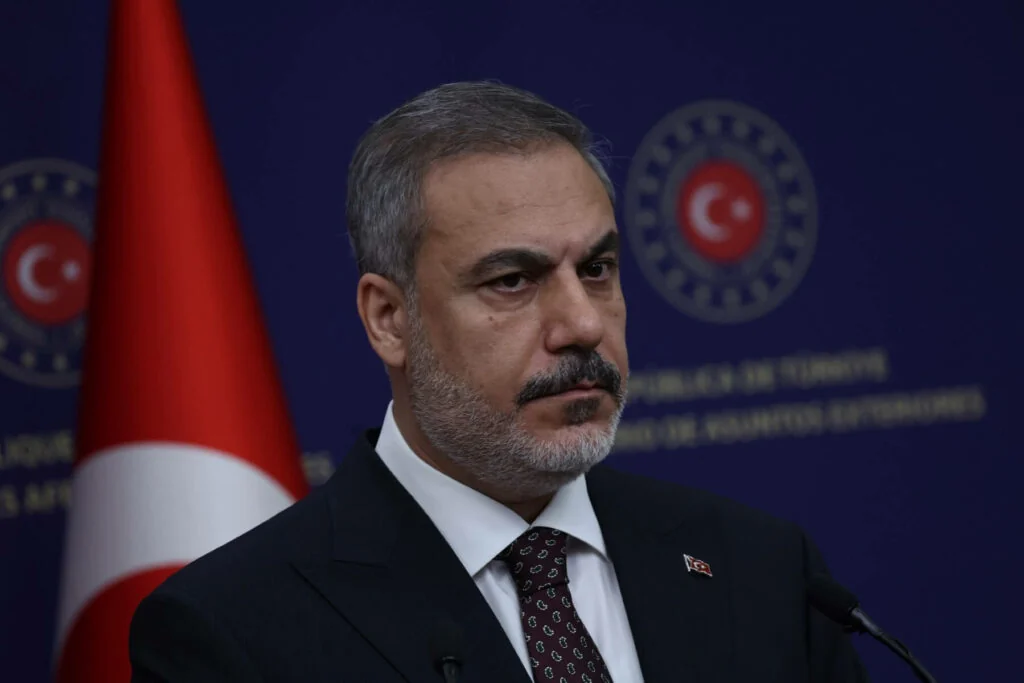
Ankara: According to Raaz News | Turkey's Foreign Minister, acknowledging that developments in Yemen are the first serious test of the Makkah Tripartite Agreement between Saudi Arabia, Turkey, and Pakistan, emphasized that Ankara has not yet decided to send military forces to Yemen; a position that, more than anything else, highlights the difficulty of entering Yemen's complex equation and the inability of political and security coalitions to contain the country's resistance.
Hakan Fidan, Turkey's Foreign Minister, announced in an interview with the "TGRT Haber" television network that Ankara has so far not made a decision to deploy military forces to Yemen; however, Turkey, within the framework of its commitments under the Makkah Tripartite Agreement, pursues the necessary support for the defense of Saudi Arabia.
Fidan, referring to the process of institutionalizing this agreement between Riyadh, Ankara, and Islamabad, said: Actions related to the creation of the main structures of this coalition continue, and decisions have also been made regarding the formation of its military headquarters and general secretariat.
He considered developments in Yemen as one of the first tests facing this agreement and emphasized: The region's problems largely stem from the lack of a sustainable system of regional coalitions.
The Makkah Agreement in Its First Test; From Signing Documents to the Reality of the Field
The Turkish Foreign Minister's remarks are raised as considerable time has passed since the formation of the Makkah Tripartite Agreement, but this security framework has so far failed to create a decisive change in Yemen's equations. Yemeni armed forces have maintained their operational capability, and reciprocal attacks and operations deep inside Saudi territory, including against the country's sensitive economic and military centers, have continued.
This situation poses a fundamental question before Ankara and Islamabad: If the Makkah Agreement is supposed to guarantee Saudi Arabia's security, why has it not yet been able to prevent the expansion of the crisis or attacks by Yemeni forces?
The reality of the field shows that merely signing an agreement, forming a secretariat, and determining military structures does not create security by itself. Sustainable security is not achieved with paper and political meetings; especially when the root of the crisis is years of military aggression, siege, and foreign intervention in an independent country.
Fidan: Saudi Arabia Cooperates with About 30 Countries on Yemen
Turkey's Foreign Minister in another part of his remarks said: Saudi Arabia cooperates with about 30 countries on the Yemen issue, and some of these countries entered these cooperations much earlier than Turkey.
Fidan also, referring to the history of defense cooperation between Ankara and Riyadh, added: Turkey has been supplying its defense industry products to Saudi Arabia for years.
These remarks, alongside the reference to the participation of numerous countries in the Yemen file, provide a picture of the extent of foreign efforts to support Saudi Arabia; efforts that, despite having political, economic, and military capacities, have so far failed to remove the resistance of Yemeni forces from the scene.
Ankara Has Not Yet Decided to Send Forces to Yemen
Fidan, regarding the possibility of Turkey's military participation in any defensive operation, also explained that such an action requires the completion of technical and legal procedures. He reminded that sending forces abroad and carrying out military missions requires obtaining permission from the Turkish parliament.
He referred to parliament's authorizations for the presence of Turkish military personnel in Syria, Iraq, Somalia, and Lebanon, as well as the mission of the country's forces in international waters, and said: The President, the Defense Minister, intelligence agencies, and Turkish diplomats are evaluating the developments.
Turkey's Foreign Minister also, referring to his country's historical experience in wars, said: Ankara wants to stay away from war, although it has the necessary readiness and experience to face it.
However, Fidan's emphasis on the necessity of going through legal and technical stages for military entry into the Yemen file shows that the political agreement among the three countries does not yet mean a definitive decision for direct military intervention.
Yemen; An Equation That Cannot Be Solved by Foreign Coalition-Building
Turkey's Foreign Minister also considered the issue of maritime security in the Bab al-Mandab strait and developments in this waterway as factors that have turned the Yemen file into a strategic issue at the global level. He said: The international community's attention to the region has increased following developments related to shipping.
Fidan speaks of the importance of maritime security while the root of the Yemen crisis cannot be separated from the war that Saudi Arabia began against the country in 2015 and continued with military attacks and an extensive siege. A policy that has affected the lives of millions of Yemenis and confronted the country's vital infrastructure with heavy damage.
Yemeni armed forces, in response to the continuation of these pressures, have proposed the strategy of "siege for siege" and have repeatedly announced operations against sensitive targets deep inside Saudi territory. Among these operations was the announced attack on the Rabigh refinery and a radar system in the Al-Dawasir area; operations whose spokesperson for Yemen's armed forces announced the achievement of their objectives.
These developments have highlighted the vulnerability of Saudi Arabia's security against the operational capability of Yemeni forces and show that even having the political and defense support of numerous countries does not necessarily mean immunity from military responses.
Ankara and Islamabad must keep in mind that Saudi Arabia's security is not achieved by expanding coalitions, selling military equipment, or designing joint structures; as long as military aggression, siege, and intervention in Yemen's internal affairs continue, the ground for resistance and reciprocal response will also remain.
The Makkah Agreement is now facing a real test, and the inability of Saudi Arabia's allies to confront Yemeni armed forces has come to the fore. The experience of past years has shown that external pressure has not been able to remove Yemeni forces from the field. Therefore, the path to achieving sustainable security passes not through confrontation with Yemen, but through stopping Saudi aggressions, lifting the siege, and respecting the independence and will of the country's people.