
Iraq Approves Joint Forces Deployment Plan in Jurf al-Sakhar; Hezbollah Brigades Redeployment Under Discussion
Iraqi PM approves a joint forces deployment plan for Jurf al-Sakhar, as talks continue over the possible redeployment of some Hezbollah Brigades forces.
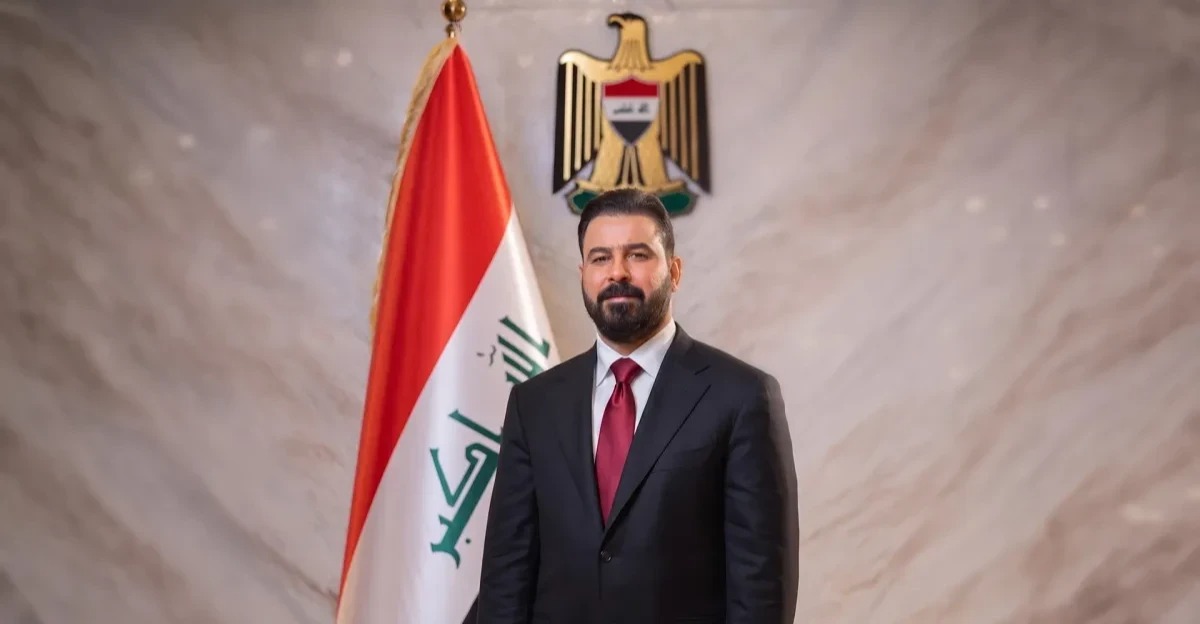
Baghdad: According to Raaz News | The Iraqi prime minister has approved a plan to deploy forces and divide security responsibilities among the army, Federal Police and Popular Mobilization Forces (PMF) in the strategic area of Jurf al-Sakhar, while consultations continue to reach an agreement on the possible redeployment of some Hezbollah Brigades forces.
Iraqi Prime Minister and Commander-in-Chief of the Armed Forces Ali al-Zaidi has approved a plan to distribute security responsibilities among the army, Federal Police, Popular Mobilization Forces and Energy Police in the Jurf al-Sakhar area of Babil province. The plan was drawn up as part of coordination between security institutions and groups present in the area, with the aim of organizing security responsibilities.
According to the document published on the matter, responsibility for securing different parts of Jurf al-Sakhar has been divided among the participating forces. Under the plan, the 38th Brigade of the Iraqi Army’s 10th Division will cover the area extending from the Ya Hussein berm to the Fadhiliya intersection, on the border with the Anbar Operations Command.
The 17th Brigade, affiliated with Iraq’s Interior Ministry, will be responsible for the central part of Jurf al-Nasr, covering the area between the Euphrates River and the Musayyib–Fadhiliya road. The PMF’s 72nd and 79th Brigades will cover the area between this road and the boundary of the Karbala Operations Command.
Under the plan, a regiment of the Energy Police will also be tasked with protecting oil pipelines. Babil Provincial Police will establish a checkpoint at the Fadhiliya intersection on the road leading to Musayyib, while Anbar Provincial Police will set up another checkpoint on the route to Amiriyah Fallujah.
The plan also calls for reopening the Musayyib–al-Bahbahani–Fadhiliya intersection–Amiriyah Fallujah road. In addition, a battalion of Iraq’s Counter-Terrorism Service, currently stationed at al-Hamiyah Camp, will serve as a reserve force under the commander-in-chief of the armed forces to respond to emergencies in the area.
Consultations on the Redeployment of Hezbollah Brigades Forces
Alongside the preparation of this plan, a three-member committee has been formed to propose solutions and reach an agreement with the Hezbollah Brigades. According to a source within the Coordination Framework, the committee comprises Hadi al-Amiri, head of the Badr Organization; Faleh al-Fayyad, head of the Popular Mobilization Commission; and Abdulaziz al-Muhammadawi, chief of staff of the PMF, known as Abu Fadak.
Under the committee’s proposals, the transfer of Hezbollah Brigades units from Jurf al-Sakhar to areas along the Iraq-Syria border and their replacement by three PMF brigades are under consideration. According to these proposals, some Hezbollah Brigades commanders and personnel would remain at designated locations, while the Federal Police’s 3rd Division would also participate in securing the area.
Hezbollah Brigades’ Position Before Approval of the Plan
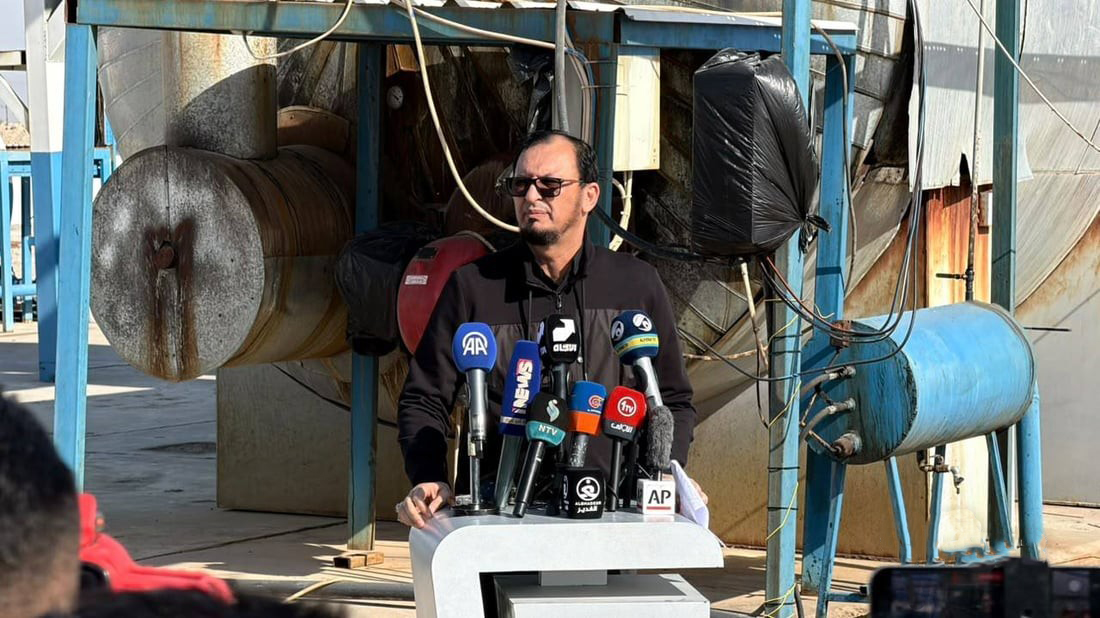
One day before the approval of the new plan, Abu Talib al-Saidi, a Hezbollah Brigades commander, addressed developments in the area and the possibility of tensions between resistance forces and Iraqi security agencies during a press conference held by the group in Jurf al-Nasr, attended by local and foreign media outlets.
Al-Saidi stressed that Hezbollah Brigades had no intention of clashing with Iraqi security forces, saying: “Some want the blood of the sons of one country, including our mujahideen and brothers in the security agencies, to be shed, even though over the past 12 years, from the time Grand Ayatollah al-Sistani issued his fatwa until today, we have stood together on the same front.”
Referring to the history of cooperation between the PMF and Hezbollah Brigades, on the one hand, and the army, Federal Police and Counter-Terrorism Service, on the other, in liberating Jurf al-Sakhar, he said that during previous battles, the blood of members of these groups and Iraqi security agencies had been shed side by side.
The Hezbollah Brigades commander added that the group’s forces had previously taken part in liberating Jurf al-Sakhar alongside other security agencies, and that political decisions and what he described as the current prime minister’s adventurism should not create conditions for confrontation among these forces.
Al-Saidi also stressed that a scenario involving clashes between the PMF and Hezbollah Brigades, on one side, and Iraqi security agencies, on the other, would not materialize. He said the group had not participated in Iraq’s political structure and that none of its members had ever held government positions as a minister, deputy minister or municipal head. He described fighting those he called Iraq’s enemies as the group’s main approach.
Response to Reports About Facilities in Jurf al-Nasr
In another part of his remarks, Al-Saidi responded to reports about the presence of oil-processing facilities in Jurf al-Nasr, saying that the facilities in question were small, rudimentary units used to improve fuel quality.
According to him, these units are located more than five kilometres from oil pipelines and along routes used by pilgrims. Therefore, contrary to what has been stated in some reports, they are not secret facilities and are visible to people travelling through Jurf al-Nasr.
Referring to a visit by a government committee to the area, he also said that the entire Jurf al-Nasr area had been accessible to committee members and that no restrictions had been imposed on their movement or activities. Responding to the prime minister’s spokesperson’s remarks about alleged provocative conduct during the visit, Al-Saidi rejected the claim, saying Hezbollah Brigades members had treated the committee members respectfully and held no animosity towards them.
The Hezbollah Brigades commander concluded by describing statements and reports concerning the area as politically motivated and warning against attempts to create a confrontation between the PMF and Iraqi security agencies.
Historical Background and Jurf al-Sakhar’s Strategic Importance in Iraq’s Security Landscape
Jurf al-Sakhar, officially known as Jurf al-Nasr, is an area in Babil province, approximately 60 kilometres southwest of Baghdad. Its geographical position has made it a strategic link between the provinces of Babil, Baghdad, Anbar and Karbala.
The security significance of Jurf al-Sakhar dates back to 2014, when ISIS seized the area. Iraqi forces and the Popular Mobilization Forces subsequently recaptured it during Operation Ashura. Following the operation, the area's original residents were unable to return to their homes, and its security structure gradually took shape through the presence of PMF forces, particularly the Hezbollah Brigades.
In November 2026, reorganizing the security situation in the area once again became a priority for the Iraqi government. Consultations and negotiations were consequently launched to reach an agreement on the deployment and possible redeployment of forces.
The formation of a three-member committee comprising senior PMF and Coordination Framework figures to negotiate with the Hezbollah Brigades is among the measures taken in this regard. The proposal to transfer some forces to areas along the Iraq-Syria border and replace them with other PMF units has also been raised within this framework.
The Iraqi government's new plan seeks to divide security responsibilities among the army, Federal Police and other units while maintaining the presence of the Popular Mobilization Forces. Reopening access routes and assigning reserve forces to respond to emergencies are also among the key components of the plan.