
UAE's Expanding Interventions in Africa with Israeli Support; How Is Abu Dhabi Losing Its Allies?
The UAE's interventionist foreign policy in the African continent, ranging from support for armed and separatist actors to the expansion of security relations with the Israeli regime, has become a growing factor of tension with regional governments.
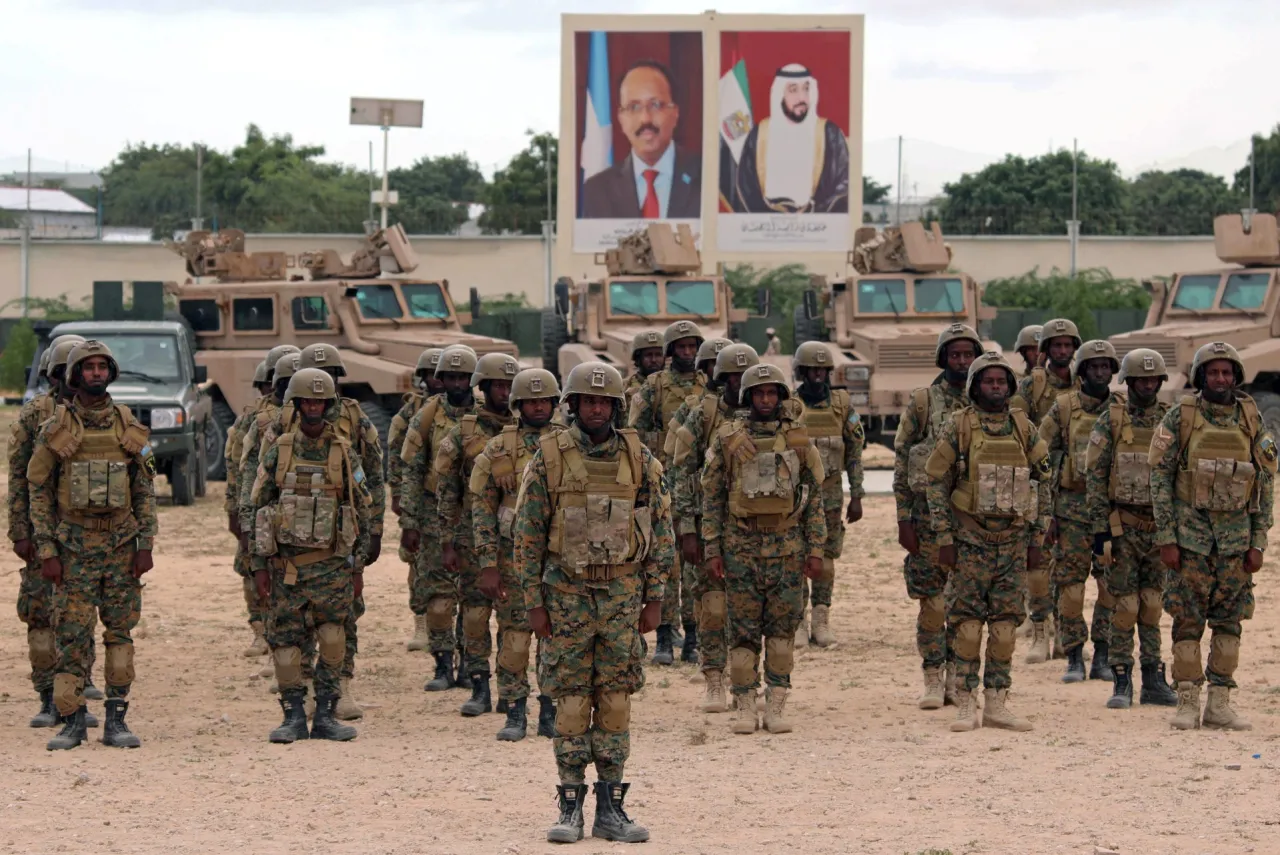
Mogadishu: According to Raaz News | The UAE's interventionist foreign policy in the African continent, ranging from support for armed and separatist actors to the expansion of security relations with the Israeli regime, has become a growing factor of tension with regional governments; a process that now, with the downgrading of diplomatic relations by Somalia, Algeria, and Sudan with Abu Dhabi, reveals its political and regional costs more clearly than ever before.
The UAE, which over the past decades had achieved a position beyond its geographical size in international equations by relying on massive investments, economic influence, and expanding military presence, is now facing the consequences of a policy that, instead of strengthening stability, has led to the intensification of differences and the complication of crises in various African countries.
According to the published report, Somalia on November 19, accusing Abu Dhabi of interfering in its internal affairs, ordered the UAE ambassador to leave within 72 hours and also recalled its ambassador from Abu Dhabi. Prior to this, Algeria had severed diplomatic relations with the UAE in September, and the military government ruling Sudan had made the same decision in May 2025.
Somalia; Dispute Over National Sovereignty and Abu Dhabi's Relations with Separatist Regions
Relations between Mogadishu and Abu Dhabi have severely deteriorated over the past year. One of the most important factors in this crisis is the UAE's relations with the autonomous region of Somaliland; a region that declared independence in 1991 but still lacks broad international recognition.
The UAE has invested in ports and established security relations in Somaliland. Abu Dhabi also has relations with the local governments of Puntland and Jubaland; relations that the central government of Somalia considers interference in the country's political structure and a threat to its national sovereignty.
Tensions escalated after the Israeli regime recognized Somaliland's independence in December 2025; an action that Mogadishu considered Abu Dhabi involved in facilitating. The Somali government in January also canceled all bilateral agreements with the UAE, including those related to ports and defense cooperation.
Mogadishu in its statement considered the UAE's actions contrary to international law. Abu Dhabi, in contrast, described Somalia's decision as hostile and irresponsible and claimed that the country's government is trying to involve the UAE in its internal disputes.
Sudan; UAE Military Support for Rapid Support Forces and the Ignition of Civil War
The UAE's role in the Sudan crisis is one of the most serious axes of criticism of Abu Dhabi's foreign policy. The country's civil war began in 2023 and has led to the killing of tens of thousands of people and the displacement of about 13 million.
The UAE plays a role in military and logistical support for the Rapid Support Forces led by Mohamed Hamdan Dagalo, known as Hemedti; a paramilitary group fighting against the Sudanese army and the country's military-oriented government. In contrast, Saudi Arabia has supported the government based in Port Sudan.
A United Nations fact-finding mission in a report published last month announced that there is credible evidence showing that individuals and entities linked to the UAE have played a "significant" role in military support networks for the Rapid Support Forces. Abu Dhabi has strongly rejected these accusations and considered them baseless.
Sudan in March 2025 also, by filing a complaint at the International Court of Justice, accused the UAE of violating the Genocide Convention through support for the Rapid Support Forces. The Court, citing lack of jurisdiction, did not substantively review the case. A few days later, the Sudanese government severed its diplomatic relations with the UAE.
Abu Dhabi in response rejected the court's decision and said: The authorities based in Port Sudan do not represent the legitimate government of this country. However, the continuation of the war and the dimensions of the humanitarian catastrophe in Sudan have turned the issue of the role of foreign actors in supplying weapons and supporting the parties involved into one of the main concerns of the region.
Algeria; From Libya and the African Sahel to Dispute Over Western Sahara
Tensions between Algeria and the UAE also led to the severance of diplomatic relations in September. Algerian officials, when announcing this decision, spoke of the UAE's "increasing provocative and hostile actions," although they did not provide specific details about the cases of objection.
Abdelmadjid Tebboune, the President of Algeria, has repeatedly accused the UAE of playing a destabilizing role in countries such as Mali, Libya, and Sudan. In Libya, Abu Dhabi has supported Khalifa Haftar, the military commander of the country's east, while Algeria has supported the government based in Tripoli.
The expansion of the UAE's relations with military governments in the African Sahel region is also considered by Algeria as a threat to its regional influence and national security. The two sides' dispute has also extended to the Western Sahara issue; the UAE supports Morocco's position on sovereignty over this region, while Algeria supports the Polisario Front and the demand for Western Sahara's independence.
Link with the Israeli Regime; Another Factor in Abu Dhabi's Political Isolation
One of the important dimensions of the UAE's disputes with some Islamic countries is the deepening of Abu Dhabi's relations with the Israeli regime. The UAE in 2020, within the framework of the Abraham Accords, normalized its official relations with Tel Aviv; a process that was accompanied by Algeria's opposition.
Algeria has always emphasized the position that the normalization of relations with the Israeli regime must be conditional on the resolution of the Palestinian issue and the end of the occupation. From the perspective of critics of Abu Dhabi's policy, close cooperation with a regime that continues to occupy the land of Palestine and conducts military operations in Gaza, Lebanon, and other parts of the region not only does not contribute to peace and stability but can provide the ground for the expansion of its security influence and interventions.
The simultaneity of the expansion of the UAE's relations with the Israeli regime and Abu Dhabi's active presence in African security and military files has raised serious questions about the nature of these cooperations and their consequences for the sovereignty of regional countries. Critics say that security ties with Tel Aviv, alongside support for non-state actors and local armed forces, can lead to the strengthening of foreign influence networks and the weakening of independent governments.
Abu Dhabi: Internal Crises Are the Cause of Tension with the UAE
Mohammed Al-Sawwaf, Director of the Media Department of the Parliament in the UAE's Federal National Council, in reaction to the severance or downgrading of relations by Somalia, Sudan, and Algeria, considered these developments to be caused by the internal crises of these countries.
He claimed: The purpose of accusing the UAE is to transfer internal crises abroad and divert public opinion from the root of the problems. Al-Sawwaf also introduced the ideological ties of the governments of these countries with political Islam movements as factors of tension and added: Abu Dhabi, to protect its long-term interests, will use international law and arbitration mechanisms if necessary.
In contrast, Anna Jacobs, an analyst at the Gulf States Institute in Washington, believes that despite the increase in the political costs of the UAE's engagements in the Horn of Africa, this country is not yet on the verge of complete diplomatic isolation and still enjoys strong relations in Washington, Europe, and the Middle East.
She also pointed to the growing differences between the UAE and Saudi Arabia; a competition that became more apparent in 2025 over the two countries' different objectives in Yemen and Africa. According to Jacobs, Abu Dhabi has supported alliances with separatist regions and non-state actors in Africa, while Riyadh considers the strengthening of established governments as part of its security priorities.