
Sindh and China’s Hubei Province Agree to Establish Joint Working Group to Boost Trade and Investment
Pakistan’s Sindh province and China’s Hubei Province have agreed to establish a joint working group to promote trade, investment and industrial cooperation, marking a new step toward strengthening economic and institutional ties between the two sides.
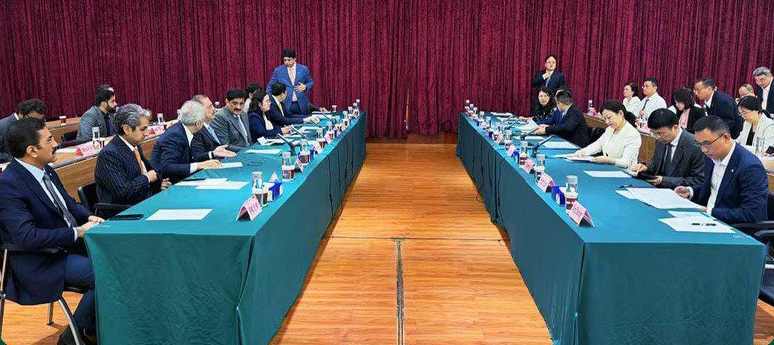
WUHAN, China — Pakistan’s Sindh province and China’s Hubei Province have agreed to establish a joint working group to promote trade, investment and industrial cooperation, marking a new step toward strengthening economic and institutional ties between the two sides.
The agreement was reached during a high-level meeting in Wuhan between a Sindh delegation led by Chief Minister Syed Murad Ali Shah and officials from the Hubei Department of Commerce and the China Council for the Promotion of International Trade (CCPIT) Hubei.
The delegation included Senior Minister Sharjeel Inam Memon, Planning Minister Jam Khan Shoro, Special Assistant for Investment Syed Qasim Naveed and other senior officials.
The proposed joint working group will focus on expanding bilateral trade and investment, identifying opportunities for joint projects and encouraging industrial partnerships between businesses in Sindh and Hubei.
Murad Ali Shah invited Chinese investors and business leaders to explore investment opportunities in Sindh, emphasizing the province’s strategic position as one of Pakistan’s principal commercial centres and a gateway to markets across South Asia, the Middle East and Central Asia.
He highlighted the importance of Karachi Port, Port Qasim and the China–Pakistan Economic Corridor (CPEC) in facilitating trade and providing investors with access to extensive regional markets.
The chief minister also encouraged Chinese companies to invest in agriculture, manufacturing, information technology and renewable energy, identifying the Dhabeji, Korangi and Khairpur Special Economic Zones as key destinations for industrial investment.
He noted that tax incentives and one-window facilities are being offered to facilitate business operations and attract foreign investors.
Chinese officials expressed interest in strengthening cooperation with Sindh in industrial development, agriculture, technology and trade. The discussions highlighted opportunities to deepen commercial relations and promote mutually beneficial investment partnerships.
Murad Ali Shah also invited business leaders and investors from Hubei to participate in the Sindh Investment and Trade Conference in Shanghai, providing another opportunity to showcase the province’s investment potential and connect Chinese companies with local business partners.
The initiative reflects broader efforts to strengthen Pakistan–China economic cooperation by encouraging investment beyond existing areas of collaboration and promoting industrial development, technology transfer and regional connectivity.
The effectiveness of the agreement will depend on the implementation of the joint working group’s initiatives and the conversion of identified opportunities into concrete projects, investment commitments and long-term commercial partnerships.