Pakistan, Oman Sign Six Agreements, Vow to Deepen Bilateral Ties
Pakistan and Oman signed six agreements and Memoranda of Understanding (MoUs) on Wednesday during the 8th Session of the Pakistan-Oman Joint Ministerial Commission (JMC)
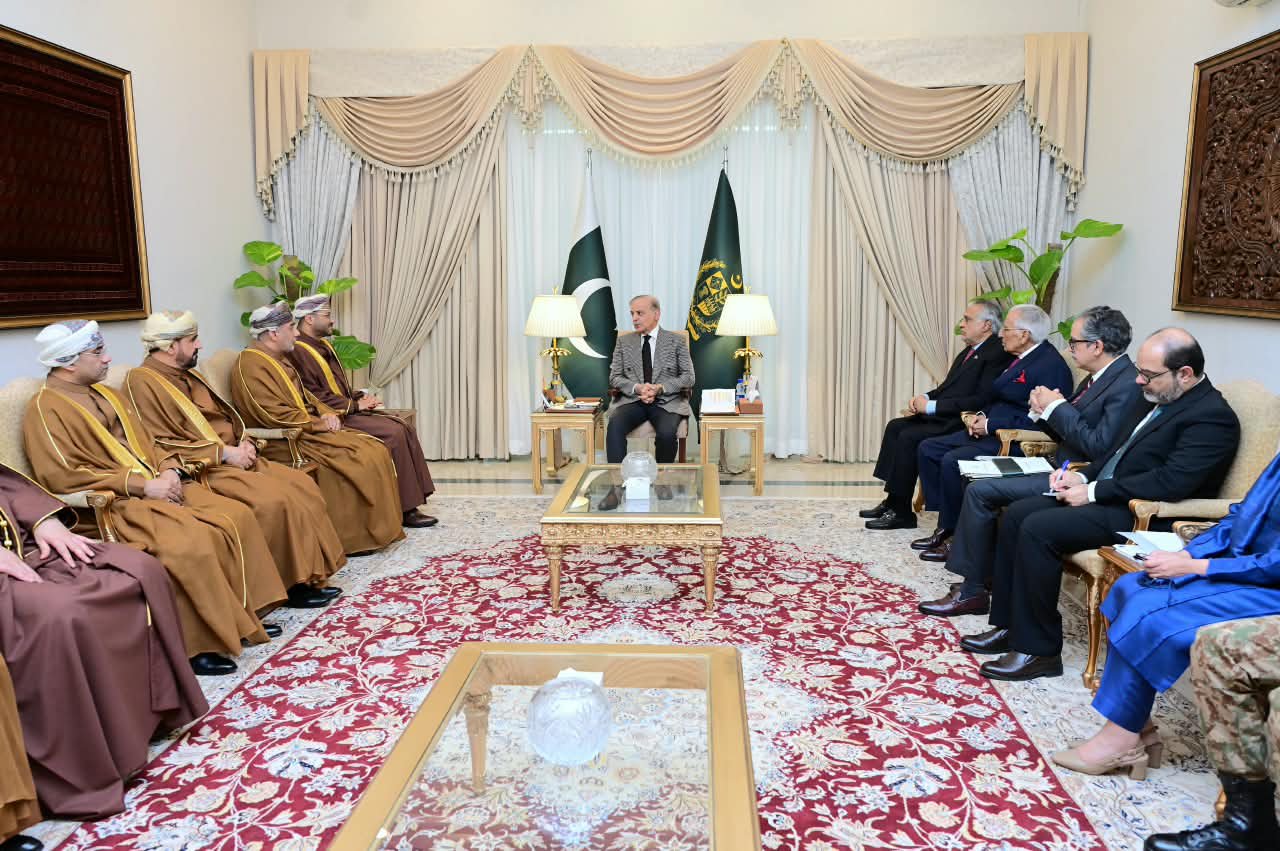
ISLAMABAD — Pakistan and Oman signed six agreements and Memoranda of Understanding (MoUs) on Wednesday during the 8th Session of the Pakistan-Oman Joint Ministerial Commission (JMC), covering mutual visa exemption for diplomatic, special, official and service passport holders, media cooperation, information technology and telecommunications, and records and archives management.
PM Shehbaz Meets Omani Foreign Minister
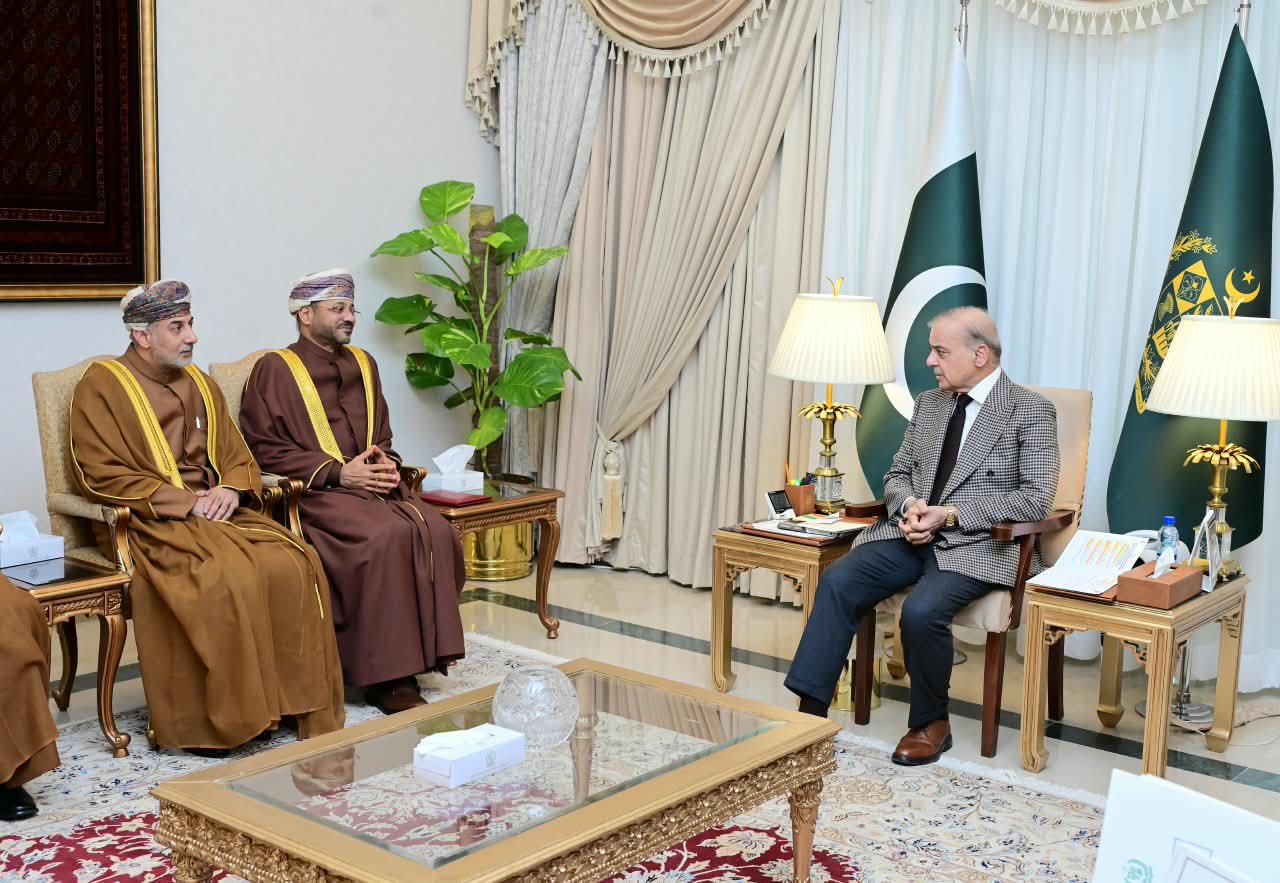
Omani Foreign Minister Sayyid Badr bin Hamad bin Hamood Al Busaidi, who is visiting Pakistan to co-chair the 8th JMC session with Deputy Prime Minister and Foreign Minister Senator Mohammad Ishaq Dar, called on Prime Minister Muhammad Shehbaz Sharif at the Prime Minister's Office.
Welcoming the Omani foreign minister, Prime Minister Shehbaz Sharif said the shared faith, geographical proximity, history, culture and centuries-old people-to-people ties between Pakistan and Oman form a strong foundation for the brotherly relations between the two countries. He said Pakistan regards Oman as a brotherly country, an important maritime neighbour and a valued partner in the region.
The prime minister expressed satisfaction over the successful holding of the 8th JMC session and expressed the hope that it would play an important role in further expanding mutually beneficial cooperation and strengthening ties between the two brotherly countries.
He also expressed satisfaction over the complete convergence of views between Pakistan and Oman on regional and global affairs, and appreciated Oman's principled stance based on negotiations and diplomacy for the resolution of conflicts.
Omani Foreign Minister Sayyid Badr bin Hamad Al Busaidi thanked the Government of Pakistan for the warm reception and hospitality. Expressing satisfaction over the successful convening of the 8th JMC session, he agreed that it would pave the way for promoting cooperation between the two countries in various fields and achieving mutual interests. He also appreciated Pakistan's continued diplomatic efforts to reduce regional tensions and peacefully resolve issues.
Six Agreements Signed
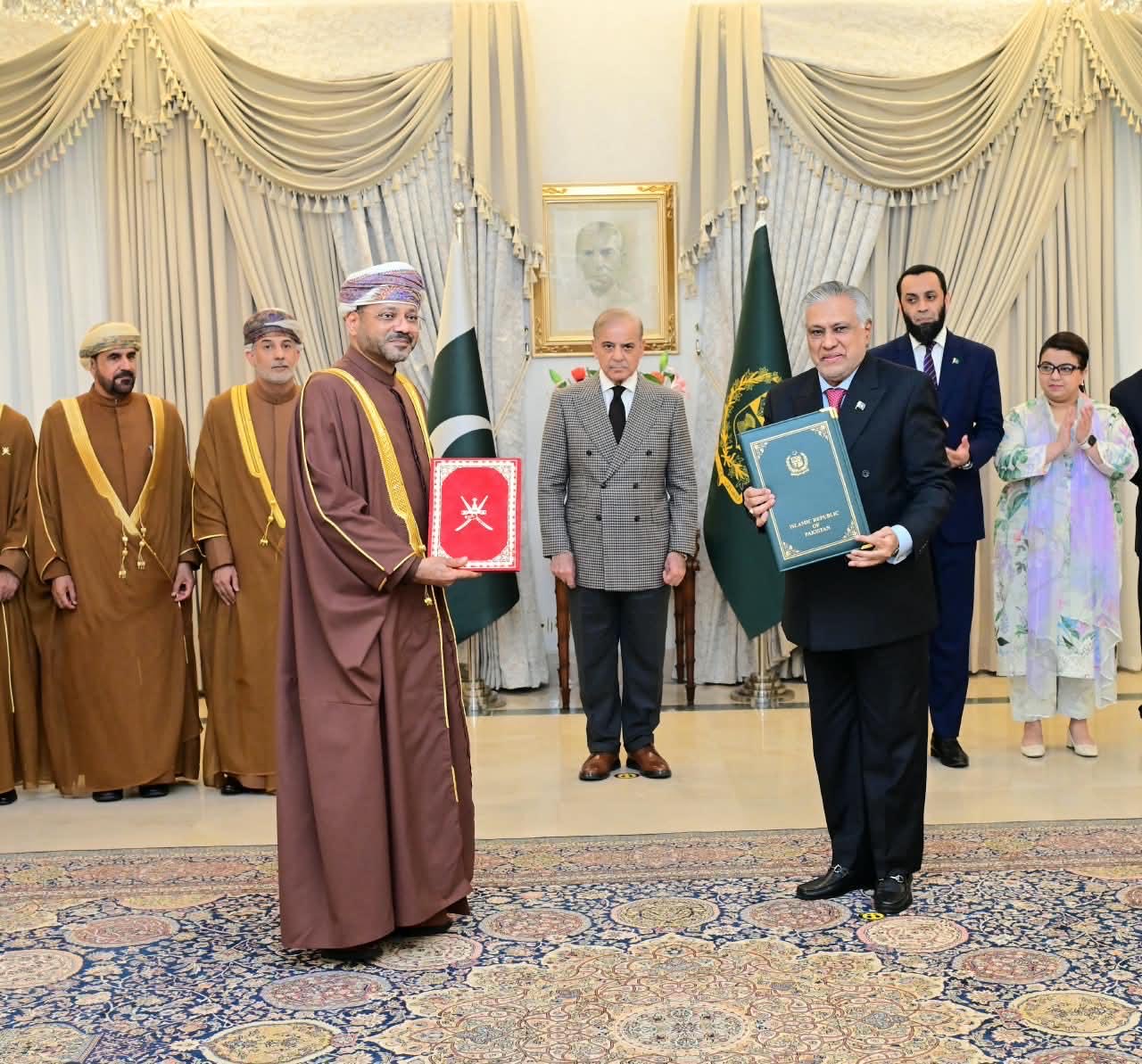
Prime Minister Shehbaz Sharif also attended the signing ceremony of the Protocol of the 8th Session of the Pakistan-Oman Joint Ministerial Commission. On the occasion, agreements and MoUs were signed relating to cooperation in the field of media, exchange of news and information, preparation and preservation of historical documents and archives, communications and information technology, and facilitation of exchange of delegations at diplomatic and official levels.
Deputy Prime Minister and Foreign Minister Senator Mohammad Ishaq Dar and Omani Foreign Minister Sayyid Badr bin Hamad bin Hamood Al Busaidi signed the Protocol Recording the Minutes of the 8th Pakistan-Oman JMC, the Agreement on Mutual Visa Exemption for Holders of Diplomatic, Special, Official and Service Passports, and the MoU on Records and Archives.
The remaining three MoUs — covering cooperation in information and broadcasting, IT and telecommunications, and news exchange and media cooperation — were signed by the Federal Minister for Information and Broadcasting and the Federal Minister for IT and Telecommunication, respectively.
Dar's Remarks at Joint Press Stakeout
In his remarks at a joint press stakeout with the Omani foreign minister in Islamabad on 14 October 2026, Deputy Prime Minister and Foreign Minister Senator Mohammad Ishaq Dar welcomed the Omani delegation and said the 8th JMC session had just concluded very successfully, which he had the honour of co-chairing.
Dar said the discussions were held in a cordial and constructive atmosphere, reflecting the deep-rooted bonds of friendship, mutual trust and brotherhood that have characterized Pakistan-Oman relations, and that both sides reaffirmed their shared commitment to further strengthening bilateral cooperation across a broad spectrum of sectors.
Announcing the signing of the Protocol of the 8th Session, he said it reflects the shared resolve to further strengthen and expand bilateral cooperation in areas of mutual interest. He noted that the Agreement on Mutual Visa Exemption for Holders of Diplomatic, Special, Service and Official Passports would facilitate official exchanges and contribute to closer engagement between the two brotherly countries, while a number of bilateral agreements would also be signed covering news and information exchange, communications and information technology, historical documentation, records and archives management, and media cooperation.
A key outcome of the session, Dar said, was the strengthening of the institutional framework through the establishment and operationalization of several Joint Working Groups, including in the fields of trade and investment, agriculture, oil and gas, and labour and human resource development, which would ensure regular engagement and effective implementation of JMC decisions.
He said both sides welcomed closer engagement between the business communities of the two countries and encouraged greater investment in Special Economic Zones and Free Zones. They also acknowledged the valuable contribution of the Pakistani community in Oman, which continues to serve as a strong bridge between the two brotherly countries, and reaffirmed their commitment to strengthening cooperation in labour mobility, vocational training and human resource development to create new opportunities for skilled Pakistani professionals and workers.
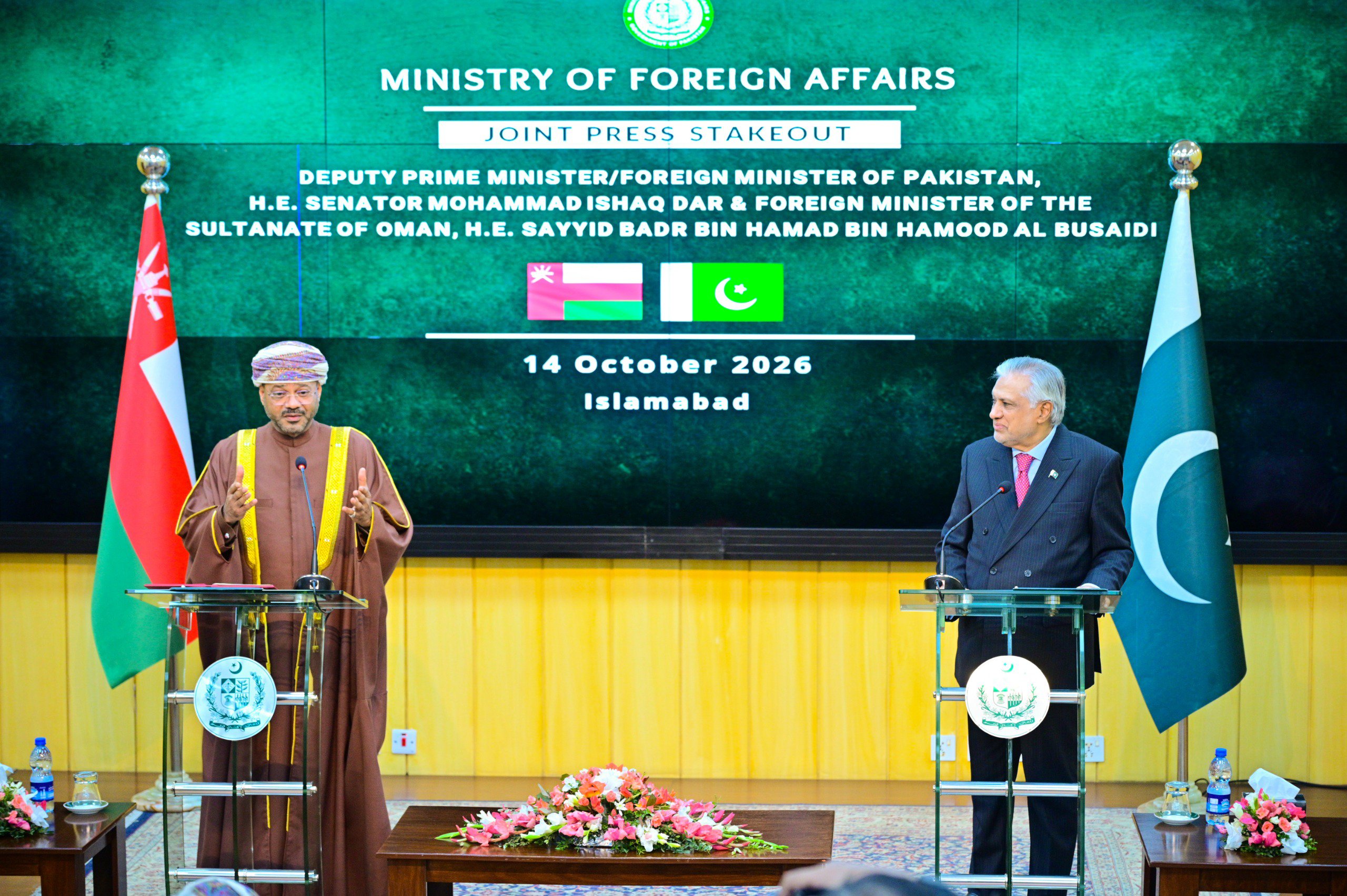
Regional and Global Issues
On the evolving situation in the Gulf, Dar said both sides underscored the importance of restraint, de-escalation, dialogue and diplomacy, and highlighted the need to ensure the safety and freedom of navigation through the Strait of Hormuz and Bab al-Mandeb, given their critical importance to regional and global food and energy security. Pakistan, he said, remains committed to contributing constructively to diplomatic efforts aimed at promoting peace and stability in the region.
Regarding the recent Houthi attacks on Saudi Arabia, Dar conveyed Pakistan's strongest condemnation of the attack, which resulted in injuries to several individuals, the martyrdom of one Pakistani and injuries to five Pakistani nationals. He underscored that attacks against civilians and civilian infrastructure are unacceptable, violate international law and pose a serious threat to regional peace and security, and reaffirmed Pakistan's full solidarity with the leadership and people of the Kingdom of Saudi Arabia, as well as its unwavering commitment to the Kingdom's sovereignty, territorial integrity and security, in accordance with the Makkah Joint Defence Agreement.
On Palestine, Dar reiterated Pakistan's principled and unwavering support for the Palestinian people and their inalienable rights. Both sides expressed concern over the continued expansion of illegal settlements and efforts to alter the status of Al-Quds Al-Sharif, emphasized the urgent need for the unhindered delivery of humanitarian assistance to the people of Gaza, and reaffirmed support for a just and lasting solution in accordance with relevant UN resolutions.
Dar also raised the issue of Jammu and Kashmir, which remains a long-standing unresolved international dispute, and reiterated Pakistan's call for its just and peaceful resolution in accordance with the relevant UN Security Council resolutions.
On regional developments, including the situation in Afghanistan and the Indus Waters Treaty, Dar said Pakistan stressed the imperative of ensuring that Afghan territory is not used to carry out activities against Pakistan. Regarding the Indus Waters Treaty, he emphasized that India's unilateral decision to hold the Treaty in abeyance constitutes a material breach of international law and represents a dangerous attempt to weaponize shared water resources, threatening the water, food and energy security of Pakistan's 250 million people.