
CENTCOM Chief Meets Israeli Military and Mossad Leaders as Pressure Builds for New Strikes on Iran
Amid growing Israeli efforts to persuade Washington to resume military operations against Iran and an increased US military presence in the region, CENTCOM Commander Adm. Brad Cooper held high-level talks with Israel’s military and intelligence chiefs in Tel Aviv on Wednesday. The meetings focused on regional security threats, operational coordination and preparations for a range of potential scenarios, including a possible renewed confrontation with Iran.
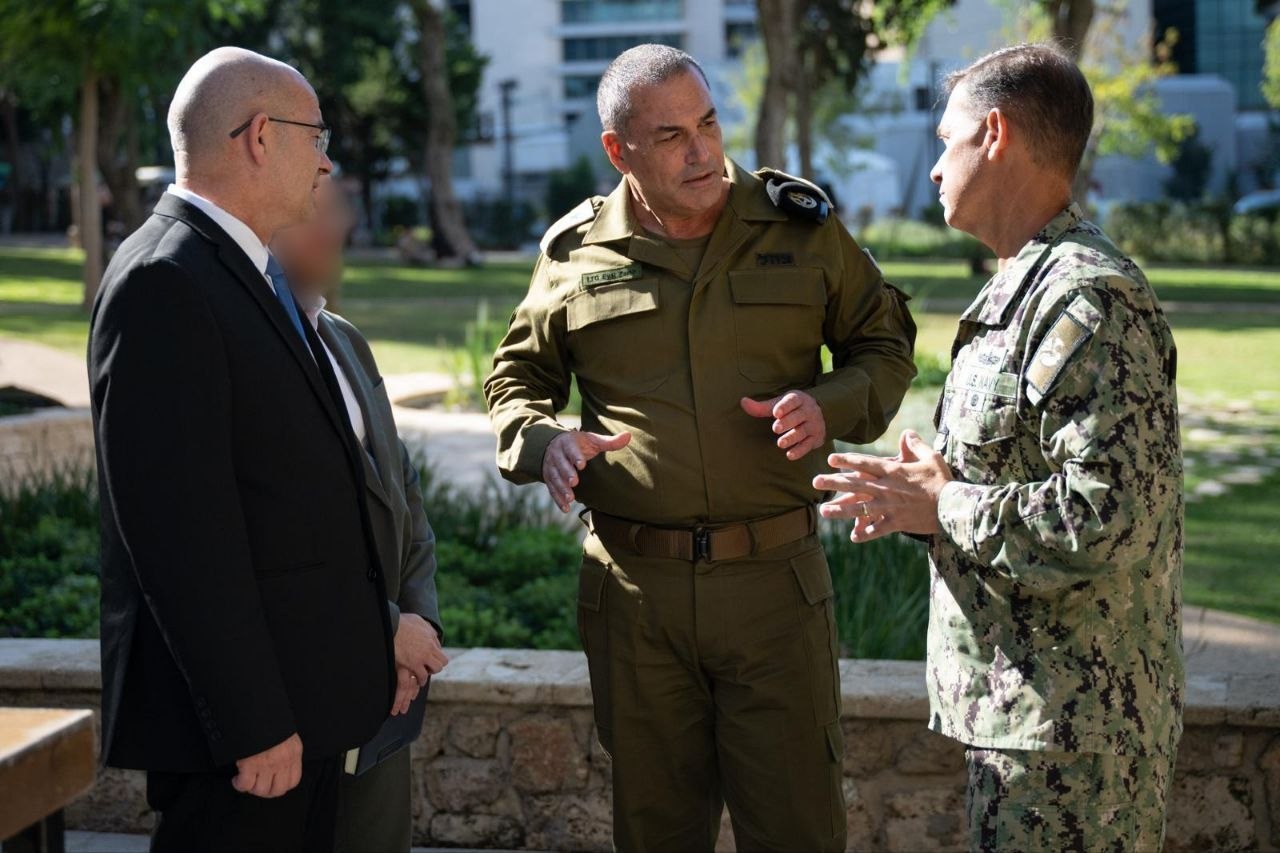
Tel Aviv : According to Raaz News | Adm. Brad Cooper, commander of US Central Command (CENTCOM), met with Israel Defense Forces (IDF) Chief of Staff Lt. Gen. Eyal Zamir and Mossad Director Roman Gofman at the Kirya military headquarters in Tel Aviv, according to the Israeli military.
The discussions began with a joint regional security assessment involving Cooper, Zamir and senior officers from both militaries, followed by a separate meeting with Gofman.
The IDF said the officials reviewed regional developments and shared security challenges, emphasizing the need to deepen strategic and operational cooperation, strengthen coordination and improve joint readiness to address a range of possible scenarios.
Senior Israeli officers attending the discussions included Operations Directorate chief Maj. Gen. Itzik Cohen, Planning Directorate chief Maj. Gen. Hidai Zilberman, Intelligence Directorate chief Maj. Gen. Shlomi Binder and Israeli Air Force Commander Maj. Gen. Omer Tischler. Other senior American and Israeli military commanders also took part.
The Times of Israel reported that the meetings concluded with a trilateral discussion involving Cooper, Zamir and Gofman. The gathering brought together the senior US military commander responsible for the region and Israel’s top military and intelligence officials amid heightened tensions involving Iran and renewed discussions about possible military action.
Mossad Chief Pushes for Renewed Strikes on Iran
The meetings come as Israeli military and intelligence officials intensify efforts to persuade Washington to resume operations against Iran.
According to sources cited by Ynetnews, Gofman recently urged American officials to consider additional strikes against Tehran. Reuters also reported that during a visit to Washington last week, the Mossad chief advocated joint US-Israeli strikes on Iran. He reportedly met with CIA Director John Ratcliffe and US envoy Steve Witkoff.
Israeli leaders have meanwhile emphasized the importance of coordinating any potential military operation with Washington.
Eli Cohen, Israel’s energy and infrastructure minister and a member of the Security Cabinet, told MBN that the United States, Israel and regional countries would be compelled to act against Tehran if Iran resumed its nuclear program. He also said Iran would continue pursuing a nuclear weapon unless it underwent fundamental political change.
US President Donald Trump said on November 9 that he would postpone further strikes on Iran following a meeting with Qatar’s prime minister, seeking to avoid another broad confrontation. Reuters reported that Gulf leaders had urged Trump not to attack Iran, warning of possible Iranian retaliation.
US Military Buildup Adds to Regional Tensions
The talks also coincided with an expansion of the American military presence in the region. The aircraft carrier USS Theodore Roosevelt arrived in CENTCOM’s area of responsibility this week, joining two other US aircraft carriers.
Rafael Cohen, director of the Strategy and Military Doctrine Program at the RAND Corporation, said the meeting should not be considered extraordinary, noting that CENTCOM officials have maintained regular contact with their Israeli counterparts since the war with Iran began.
However, he pointed to recent Iranian attacks on US bases in the Gulf and oil tankers in the Strait of Hormuz, as well as US strikes on Iran’s Qeshm Island, as developments that have further complicated the regional security situation.
Cohen said any renewed military escalation would depend not only on developments on the ground but also on political calculations within the United States.
Carrier Deployments Signal Preparedness for Possible Escalation
Kobi Michael, a researcher at Israel’s Institute for National Security Studies and the Misgav Institute, described the deployment of additional US aircraft carriers as a sign that the conflict with Iran could escalate again.
He said the recent military meetings were intended to ensure that American and Israeli forces were prepared for possible contingencies, while potentially sending a deterrent message to Tehran.
Michael also did not rule out the possibility that Israel could act independently if the Trump administration decided against joining another military confrontation with Iran.