
Pakistan Seeks Qatari Investment in Agriculture, EVs, IT and Maritime Sectors
Pakistan has invited Qatari investors to explore opportunities in key sectors, including modern agriculture, electric vehicles, information technology and maritime transport, as Islamabad seeks to attract foreign investment, strengthen economic ties with Doha and support sustainable economic growth.
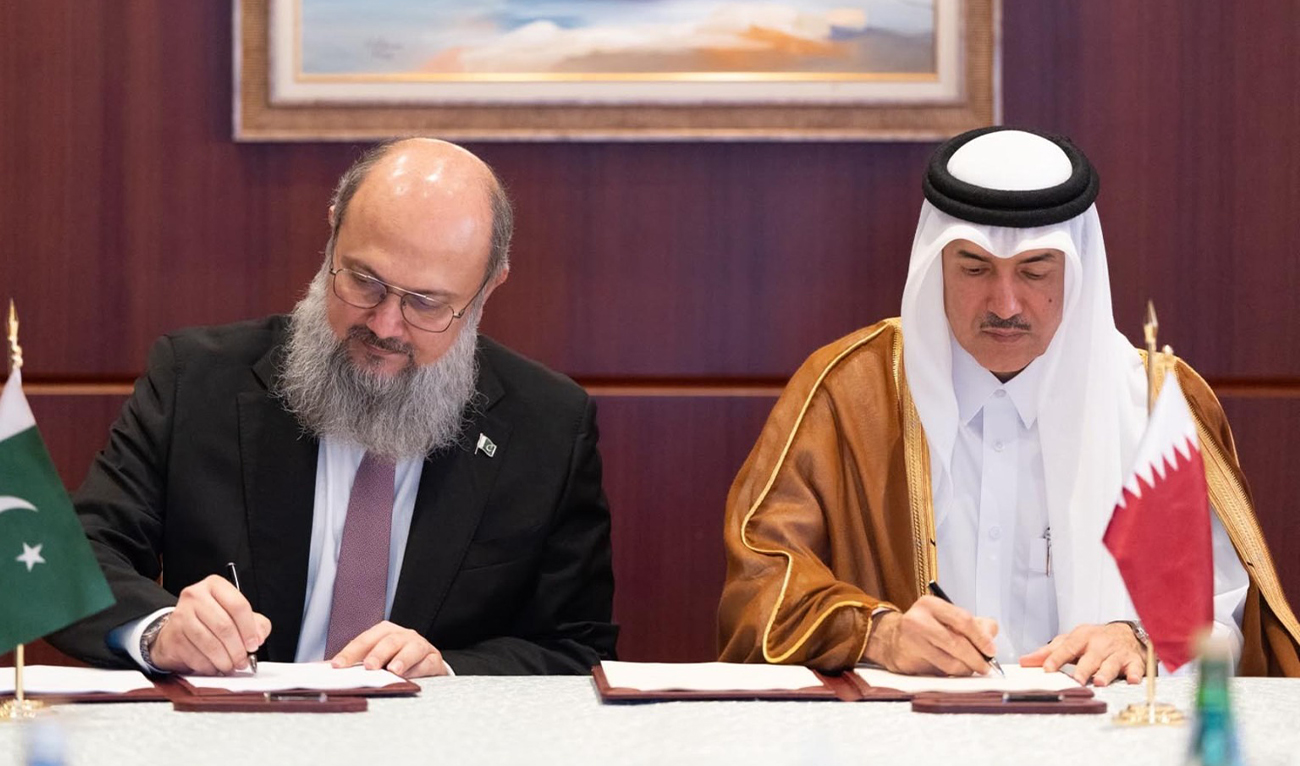
DOHA : According to Raaz News | Pakistan has invited Qatari investors to explore opportunities in key sectors, including modern agriculture, electric vehicles, information technology and maritime transport, as Islamabad seeks to attract foreign investment, strengthen economic ties with Doha and support sustainable economic growth.
The invitation came during the second meeting of the Pakistan–Qatar Joint Task Force (JTF) on Trade and Investment, co-chaired by Pakistan’s Commerce Minister Jam Kamal Khan and Qatar’s Minister of State for Foreign Trade Affairs, Dr. Ahmad bin Mohammed Al-Sayed, in Doha.
The two sides reviewed progress in bilateral economic cooperation since the inaugural JTF meeting in April 2026 and discussed measures to expand trade, facilitate investment and strengthen partnerships across priority economic sectors.
Pakistan Seeks Foreign Investment to Support Economic Recovery
Pakistan, which is pursuing economic recovery under a $7 billion International Monetary Fund (IMF) programme following years of economic challenges, is seeking greater foreign investment to promote sustainable growth, improve its external financing position and accelerate industrial activity.
According to Pakistan’s Ministry of Commerce, Islamabad invited Qatari investment in modern agriculture, grain storage facilities, silos, cold storage, integrated cold-chain infrastructure and advanced farming technologies.
Both sides also discussed establishing sustainable food supply arrangements to strengthen food security in Pakistan and Qatar.
Electric Vehicles and Information Technology
The Pakistani side highlighted investment opportunities in the automotive industry, particularly new-energy vehicles (NEVs) and electric vehicles (EVs) under the country’s new EV policy framework.
Potential areas of cooperation include joint manufacturing, technology transfer and industrial partnerships.
Pakistan also invited Qatari investors to explore opportunities in information technology and digital infrastructure, highlighting the country’s growing IT exports and the potential for technology partnerships and the expansion of digital services.
Maritime Cooperation and Energy Security
Officials from both countries identified opportunities to expand cooperation in shipping and maritime transport, particularly through the provision of oil tankers, liquefied natural gas (LNG) carriers and container vessels.
According to Pakistan’s commerce ministry, such cooperation could strengthen energy security and improve international trade connectivity.
Qatar Calls for Stronger Air Connectivity
The Qatari side emphasised the importance of enhancing cooperation in civil aviation and air connectivity between the two countries.
Pakistan welcomed the proposal and said aviation-related matters would also be addressed through the Technical Working Group on Logistics and Communications.
The Pakistani delegation also presented a proposal for an investment fund, highlighting opportunities for Qatari participation in infrastructure, agriculture, industrial development, information technology and other priority sectors.
Eleven Technical Working Groups to Advance Cooperation
Pakistan stressed the need to operationalise 11 technical working groups identified during the first Joint Task Force meeting.
The groups cover logistics, aviation, advanced manufacturing, mining and minerals, agriculture, tourism, financial technology, healthcare, education, industrial development, information technology and startups.
The working groups are expected to identify concrete trade and investment opportunities, address outstanding issues and prepare sector-specific progress reports and recommendations ahead of the third meeting of the Joint Task Force.
Both countries reaffirmed their commitment to strengthening economic cooperation through sustained engagement, improved trade facilitation, expanded investment partnerships and effective follow-up on agreed initiatives.