
Riyadh Under the Protection of Tel Aviv, Ansar Allah Moves Toward Confrontation with the Child-Killing Regime
While Saudi Arabia, with intelligence and military support from the United States and the Israeli , seeks to contain Yemen’s Ansar Allah forces, reports published by Israeli media point to attempts by cells allegedly linked to the movement to infiltrate the occupied territories through Jordan. This development once again raises a question for public opinion across the Islamic world: In today's regional equations, who is standing alongside the United States and the Israeli , and who is seeking to confront occupation and support the oppressed Palestinian people?

Riyadh / Sanaa : According to Raaz News | In recent days, Saudi-aligned media outlets and circles have sought to turn public opinion across the Islamic world against Ansar Allah by circulating rumors about attacks by the movement on the holy cities of Mecca and Medina. These allegations and media campaigns have diverted attention from Riyadh's military and intelligence cooperation with the United States and the Israel in the war against Ansar Allah.
This comes as reports by American and Israeli media outlets point to the considerable scale of Washington and Tel Aviv's support for Saudi Arabia in confronting Yemeni forces. This support covers areas including military intelligence sharing, target identification, battlefield intelligence assistance, and the strengthening of Saudi Arabia's air defense capabilities.
In this context, reports of intelligence cooperation between the United States, the Israel , and Riyadh indicate that Saudi Arabia is drawing on the military and security capabilities of parties that present themselves as the main enemies of the Islamic world and the Palestinian people in its campaign against Ansar Allah.
On the other side of this equation, reports by Israeli media outlets point to attempts attributed to Ansar Allah to expand the scope of its activities into the occupied territories.
According to Israeli journalist and former Haaretz correspondent Yehoshua Meiri, several attempts by cells allegedly linked to Ansar Allah to enter the occupied territories through Jordan have been identified and thwarted over recent months.
According to the report, at least one of these cells, which was attributed to Ansar Allah's so-called "Death Brigades," was arrested in Amman after entering Jordan under the guise of tourists. According to the Israeli source, members of the cell intended to cross the Jordanian land border into the occupied territories and join an armed cell operating in the West Bank.
The report also states that Jordanian intelligence services secretly provided the Israel with information about the activities of these cells and that several similar attempts had been thwarted over recent months.
According to the details in the report, based on information provided to the Israel , a cell affiliated with the Houthis' "Death Brigades" was arrested in Amman after entering Jordan under the guise of tourists. Its members intended to cross the land border into the occupied territories and join an armed cell operating in the area of Judea and Samaria (the West Bank).
A source familiar with the details said the incident was part of a series of similar attempts that had been thwarted by Jordanian intelligence services in recent months.
The information was secretly transferred to the Israel , indicating ongoing security cooperation between the two countries.
Security officials assess that the Houthis, who are backed by Iran, are seeking to expand their regional activities, including attempts to infiltrate the Israel through Jordan. This is considered part of their strategy to exert pressure on the Israel from several different directions.
From Confronting the Saudi Coalition to Expanding the Front Against the Israel
The significance of these reports is not limited to the alleged attempts to infiltrate the occupied territories. From a political and regional perspective, they point to Ansar Allah's efforts to define a role extending beyond the battlefield in Yemen.
In recent years, the movement has made support for Palestine and confrontation with the Israel one of the main pillars of its political and military positions, declaring that developments in Gaza cannot be separated from the region's security equations.
In this context, attempts attributed to Ansar Allah cells to reach the West Bank and the occupied territories, if confirmed, could indicate an approach aimed at expanding the geographical scope of confrontation with the Israel and exerting pressure from new fronts. The stated objective of this approach is to support the Palestinian people and shift the balance of power in favor of the resistance.
The "Custodians of the Two Holy Mosques" Relying on US and Israeli Intelligence Support
Meanwhile, reports by American and Israeli media outlets point to increased security and intelligence cooperation between Washington, Tel Aviv, and Riyadh in confronting Ansar Allah.
In an exclusive report published on September 10, 2026, the American network CNN, citing several informed sources, reported that more than 100 US military advisers had been deployed in Saudi Arabia to assist the country's military with military intelligence and operational targeting.
According to the report, the number of American personnel involved in this mission could reach approximately 200, based on an estimate by one US official.
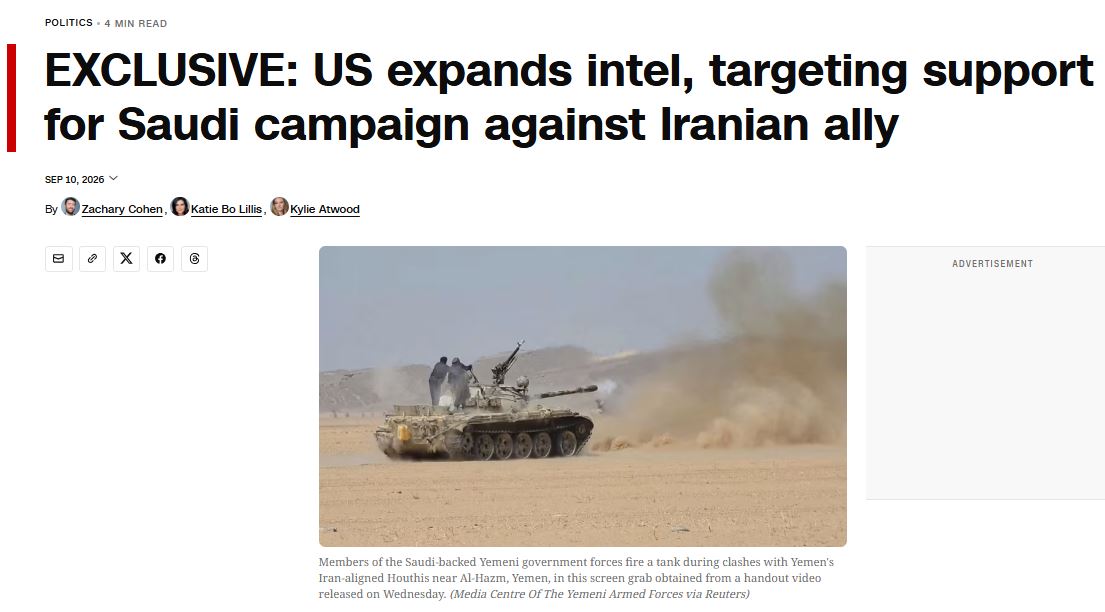
This support includes providing real-time battlefield intelligence, helping identify target locations, and offering geographical and intelligence assistance for military operations against Ansar Allah. Washington has also assisted Saudi Arabia in using a system to monitor battlefield developments in real time and facilitate the targeting process.
However, American sources emphasized that, at the time of the report, this support did not include direct participation in attacks or aerial refueling for Saudi fighter jets.
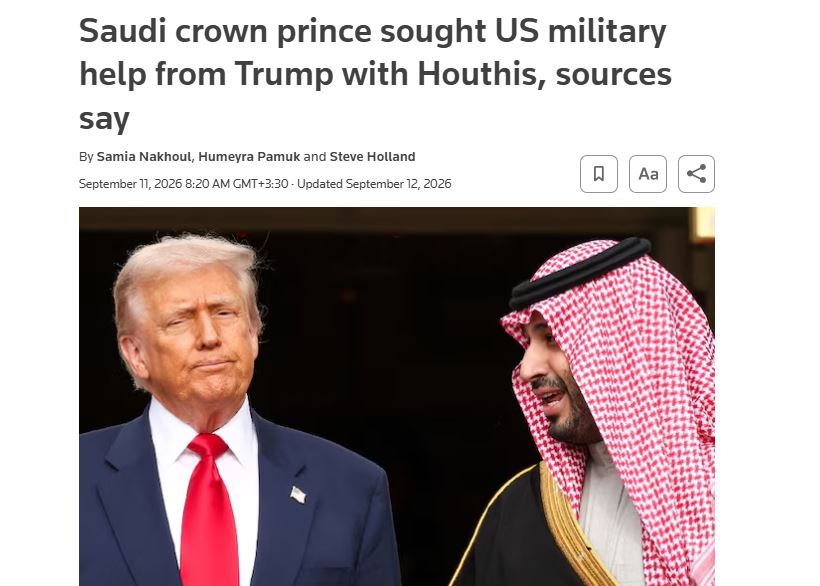
Separately, Reuters reported on September 11 that Saudi Crown Prince Mohammed bin Salman had requested US President Donald Trump to launch direct American military intervention against Ansar Allah during a phone call.
Washington did not agree to the request but instead offered to increase intelligence cooperation and assistance with target identification.
The scope of Riyadh's cooperation with Tel Aviv has not been limited to these developments.
On September 15, the Israeli newspaper The Jerusalem Post reported that Saudi Arabia and the Israeli regime had entered into discussions, mediated by the US Central Command (CENTCOM), regarding the transfer of Israeli military intelligence to Riyadh to counter Ansar Allah attacks.
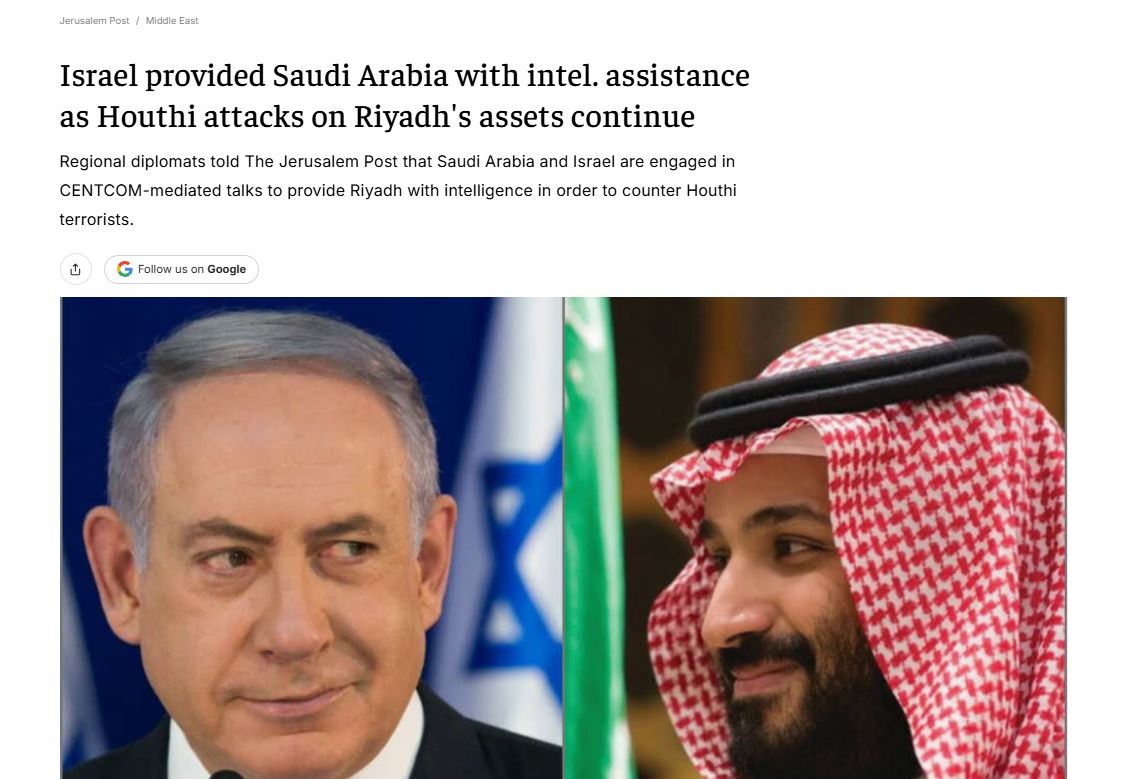
In another report published on October 22, the newspaper, citing an Israeli defense official, stated that intelligence cooperation between the Israeli military and Saudi Arabia to support the kingdom's military operations against Ansar Allah was continuing. According to the report, this cooperation was being conducted through American mediation.
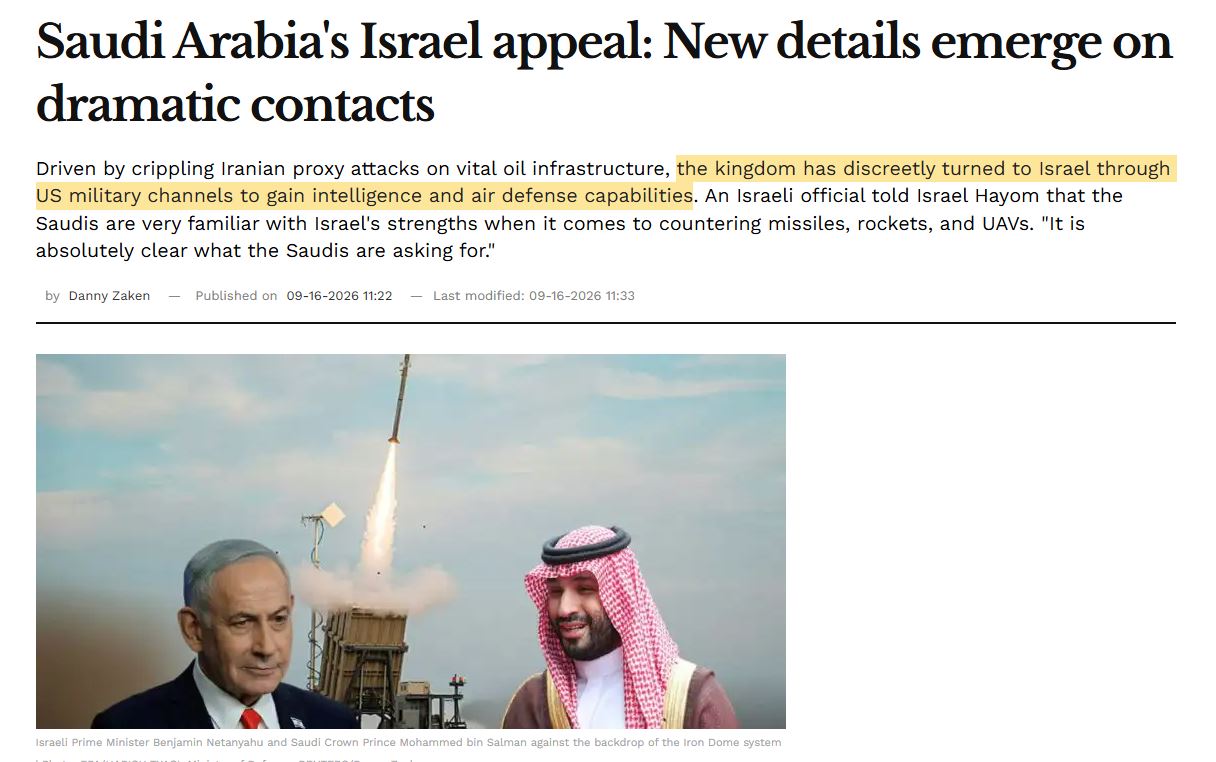
Similarly, in a report published on September 16, the Israeli newspaper Israel Hayom reported that Saudi Arabia had requested intelligence assistance and air defense capabilities from Israel.
According to regional diplomatic and security sources cited in the report, the assistance was intended to protect Saudi Arabia's critical infrastructure, oil facilities, and strategic targets against Ansar Allah's missile and drone attacks.
Taken together, these reports indicate that, contrary to the media campaigns promoted by outlets close to Riyadh, Saudi Arabia is not relying solely on its own military capabilities in its confrontation with Ansar Allah. Instead, it is drawing on the intelligence, military, and security capabilities of the United States, the Israel , and other regional and international allies.
Under these circumstances, reports concerning attempts by cells allegedly linked to Ansar Allah to infiltrate the occupied territories through Jordan, alongside reports of intelligence cooperation between Tel Aviv and Riyadh, point to the increasingly complex dimensions of the regional confrontation.
This confrontation indicates that Ansar Allah, in addition to facing the US-backed coalition and its regional allies, continues to be one of the influential actors in the security equations related to the Israeli regime.