
New Military Headquarters for Arab States Established in Kuwait; Iran Warns Against Turning the Region into a Launchpad for US-Israeli Aggression
The Persian Gulf Cooperation Council, by approving the establishment of a pioneering military command headquarters in Kuwait, has taken a new step to expand military coordination among member states
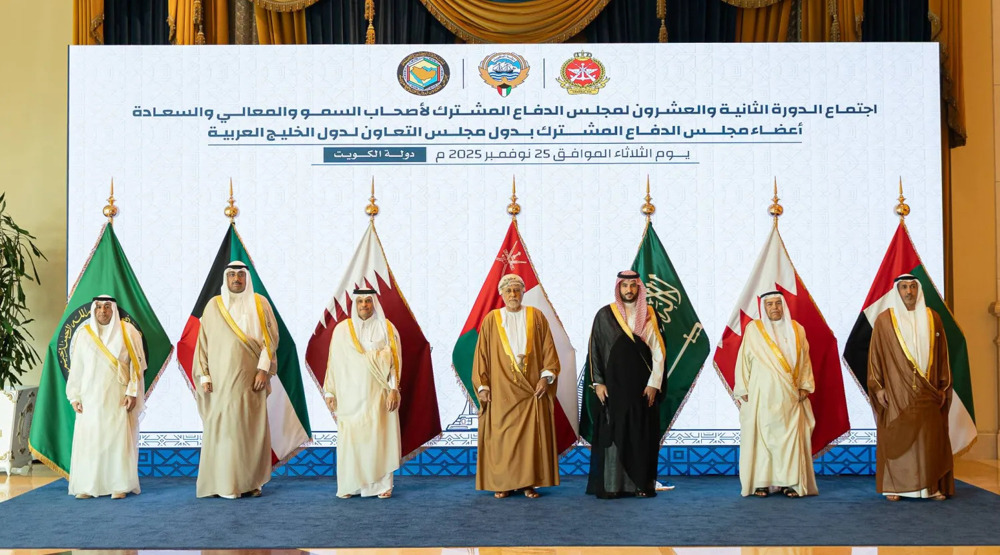
Kuwait: According to a Raaz News | The Persian Gulf Cooperation Council, by approving the establishment of a pioneering military command headquarters in Kuwait, has taken a new step to expand military coordination among member states — a decision that, amid repeated Iranian warnings about the US and Israel's use of the soil, airspace, and facilities of regional countries to attack the Islamic Republic, has created new security sensitivities.
The defense ministers of the six member states of the Persian Gulf Cooperation Council agreed on Tuesday, at the 23rd meeting of the council's Joint Defense Council in Manama, Bahrain, to establish this military headquarters in Kuwait. Jassim Mohammed Al-Budaiwi, Secretary-General of the Persian Gulf Cooperation Council, announced the decision.
According to the approved plan, forces will be assigned to the new headquarters; however, the Cooperation Council has not released details about the number of forces, the composition of units, or the precise mission of this center.
The new headquarters will operate under the unified military command of the Persian Gulf Cooperation Council — a command established in 2013 with its main headquarters in Riyadh, the capital of Saudi Arabia.
This decision was taken following the April meeting of the member states' leaders in Jeddah, where emphasis was placed on strengthening joint military cooperation.
### Expansion of Military Cooperation with the US Amid the War Against Iran
The new military move by the member states of the Cooperation Council comes as a number of Washington's allies continue to host major US military bases and facilities — a presence that has allowed the United States to maintain an extensive military foothold in the Persian Gulf region.
During the US and Israeli military aggression against Iran that began on February 28, Washington and Tel Aviv used the soil, airspace, and military facilities of neighboring countries, including the United Arab Emirates, Kuwait, and Jordan, to carry out attacks against the Islamic Republic.
This aggression began while Iran was on the path of negotiations and diplomatic efforts to resolve differences were underway; however, the US and Israel took the path of war and exposed the region to widespread security and humanitarian consequences.
In response to these attacks, Iran targeted US military positions and assets in the region and emphasized that the use of neighboring countries' facilities for aggression against the Islamic Republic will not shield those facilities from the consequences of hostile actions.
### Tehran's Warning to Regional Countries
Officials of the Islamic Republic of Iran have repeatedly warned neighboring countries not to allow their soil, airspace, and facilities to become a tool for US and Israeli regime aggression against Iran.
Tehran has also emphasized that the continuation of any military action against the Islamic Republic will bring serious consequences for the security and stability of the region, as well as for shipping in the Strait of Hormuz.
Iran has called on regional countries to adhere to the principle of good neighborliness, review their military cooperation policies with Washington and Tel Aviv, and not allow their territory to serve the warmongering of extra-regional powers.
### Regional Security Is Not Ensured by Expanding US Bases
The approval of the new military headquarters of the Persian Gulf Cooperation Council, at a time when member states continue to host extensive US military infrastructure, raises serious questions about the security orientation of these countries.
The experience of the recent war against Iran showed that the US military presence in the region is not only not a guarantee of security for host countries but can also expose their territory and facilities to the direct consequences of conflicts initiated by Washington and Tel Aviv.
From this perspective, strengthening joint military structures without reviewing the role of US bases and without guaranteeing that regional facilities will not be used for aggression against neighbors will not necessarily lead to increased collective security; rather, it can pave the way for escalating tensions and expanding the scope of crisis in West Asia.