
PAKISTAN’S STANCE IN THE IRAN–US WAR — A HISTORY OF CONTRADICTORY ALLIANCES
Pakistan’s close military ties with the United States and Saudi Arabia have reignited debate over the consistency of its foreign policy, particularly regarding Iran and Palestine. The controversy centers on Iranian allegations of support for anti-Iranian militant groups, reports of Pakistani military assistance to Saudi-backed forces in Yemen, and Pakistan’s historical involvement in Jordan’s 1970 conflict with Palestinian armed organizations. Critics argue that these developments highlight a gap between Islamabad’s public support for Palestinian rights and its strategic partnerships across the region. However, several allegations remain disputed, and reports of recent military deployments require independent verification. The debate underscores the challenges Pakistan faces in balancing its relationships with Tehran, Riyadh, and Washington while maintaining its stated commitment to regional peace and Palestinian rights.
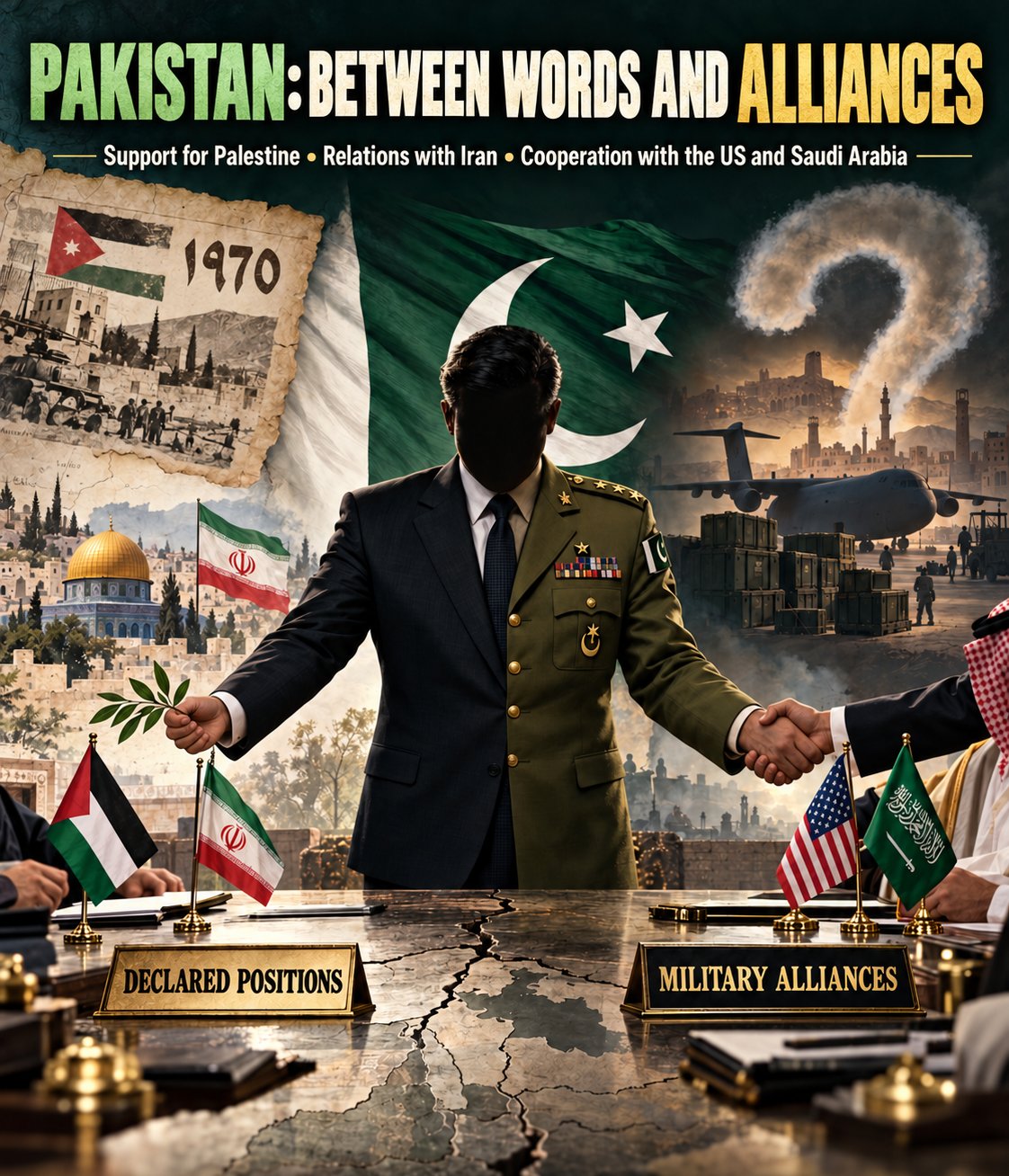
PAKISTAN & MILITANT ACTIVITIES AGAINST IRAN
During the ongoing regional conflict, attention has intensified over the activities of Jaish al-Adl, described as the successor to the Jundullah militant movement, in Iran’s Sistan and Baluchestan Province. Iran says foreign intelligence agencies, including elements linked to Pakistan and the United States, of supporting anti-Iranian militant organizations operating across the border. Following his arrest in 2010, former Jundullah leader Abdolmalek Rigi made televised statements alleging American and Pakistani backing. Iranian authorities also accused Pakistani elements of facilitating the group’s activities. These allegations have contributed to longstanding questions over Pakistan’s alleged role in militant operations targeting Iranian territory.
PAKISTANI MILITARY AIRCRAFT IN ADEN
Pakistan’s reported military involvement in the Saudi-backed campaign against Yemen’s Houthis has also attracted attention. According to the text, Reuters reported that Pakistan dispatched four military cargo aircraft to Aden in September 2026, carrying air-defense systems, light artillery, military drones and counter-drone equipment. Pakistani military advisers have also reportedly been deployed alongside Saudi personnel to support Yemeni government forces. Critics therefore characterize Pakistan’s role as military assistance to the Saudi/US/Israeli-backed camp in Yemen, while Saudi aircraft conduct airstrikes against the Houthis.
PAKISTAN’S HISTORICAL ROLE IN THE CONFLICT WITH PALESTINIAN FORCES
Pakistan’s involvement in conflicts involving Palestinian armed groups is not unprecedented. During Black September in Jordan in 1970, Pakistani Brigadier Muhammad Zia-ul-Haq, who later became Pakistan’s military ruler, was involved in Jordan’s confrontation with Palestinian resistance organizations. Historical accounts have described Zia’s involvement in military operations against Palestinian fighters, while the United States and Israel supported the survival of Jordan’s monarchy against Palestinian armed organizations. The extent of Israeli military involvement, however, has been described differently across historical accounts. The episode remains a controversial chapter in Pakistan’s military history, particularly given Islamabad’s longstanding public support for the Palestinian cause.
PAKISTAN WITHIN THE US–SAUDI REGIONAL ALIGNMENT
Pakistan maintains close military and strategic relationships with Washington and Riyadh. Its reported involvement in Saudi/US/Israeli-backed operations in Yemen, combined with its historical role in Jordan and longstanding Iranian allegations concerning anti-Iranian militant organizations, raises questions about the consistency of Islamabad’s regional policies. Despite publicly supporting Palestine and maintaining diplomatic relations with Tehran, Pakistan’s military partnerships have repeatedly placed it alongside governments whose regional interests conflict with those of Iran and Palestinian armed movements.
A CONTRADICTORY FOREIGN POLICY?
Critics argue that Pakistan’s foreign policy reflects a contradiction between its public declarations and its military relationships. On one hand, Islamabad presents itself as a supporter of Palestinian rights and regional stability. On the other, its historical involvement in conflicts against Palestinian fighters, reported military assistance to Saudi-backed forces in Yemen, and longstanding allegations surrounding anti-Iranian militant groups have fueled accusations of political hypocrisy.